
The best HVAC software for a small business
A practical, small-shop roundup of HVAC software for Canadian operators: real dollar price ranges, plain pros and cons, and the one layer the vendor lists never mention - who answers the phone.

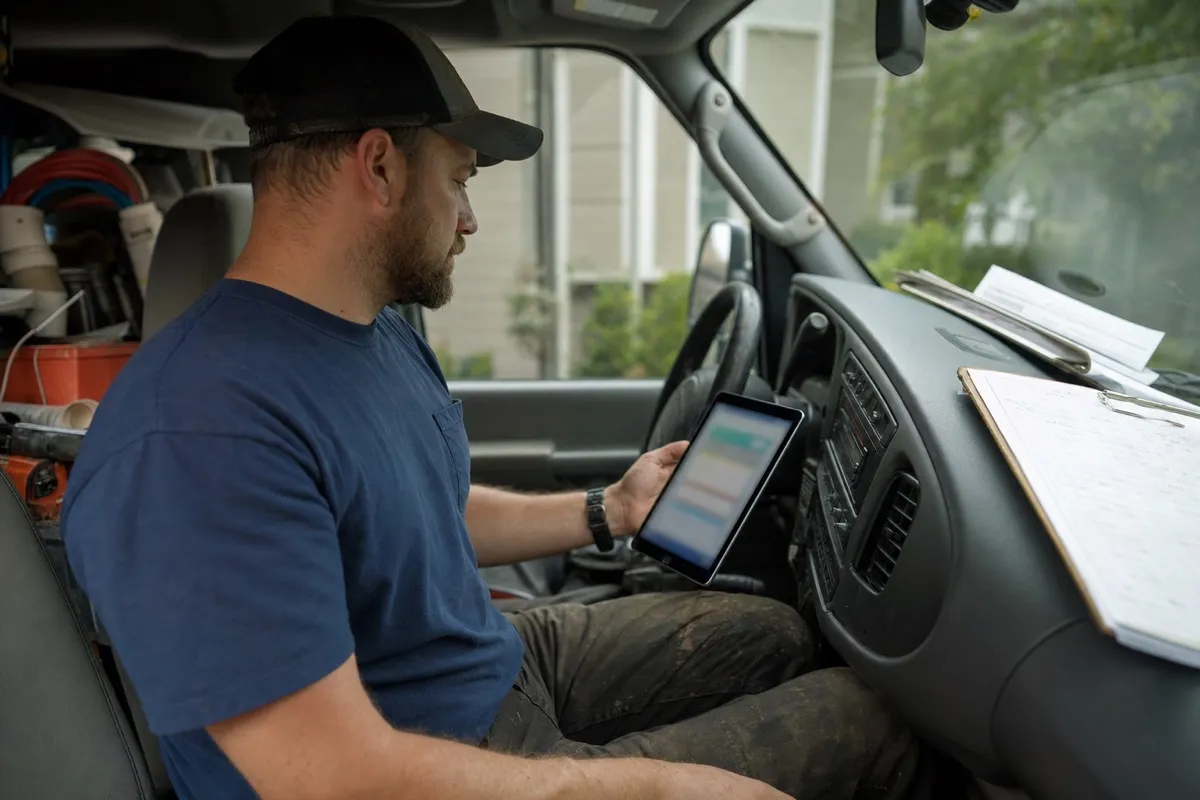
Ask ten Canadian HVAC operators which software is best and you will get ten answers, because there is no single best HVAC software for a small business. For a solo tech or a small shop, Jobber and Housecall Pro lead on scheduling and invoicing, FieldEdge suits established service companies, and ServiceTitan is built for larger outfits. Real prices run from around 40 to 550 dollars per user a month. Pick by your size.
The trouble with most "best HVAC software" lists is that a vendor wrote them to crown their own product, and almost none mention the one layer that decides whether any of this software ever gets used: who answers the phone. This roundup stays neutral, names real prices, and puts the missing piece back in.
How to choose HVAC software as a small shop
Park the feature checklists for a minute. At small scale, an HVAC business needs software to do a short list of jobs well:
- Schedule and dispatch work, and keep a shared calendar so nobody double-books.
- Quote and invoice fast, ideally right from the truck.
- Work properly on a phone, because your techs live in the field, not at a desk.
- Stay affordable per user, because every seat is real money on a small team.
Almost nobody needs all of it on day one. The smart move is to pick the tool that fits your size today and grows with you, not the platform with the longest feature list. Below are the four names a small operator actually weighs up, with an honest line on each.
The shortlist, compared
| Tool | Best for | Rough price | The tradeoff |
|---|---|---|---|
| Jobber | Solo to small teams | From ~$40-200/mo | Lighter on deep field-service depth |
| Housecall Pro | Small teams scaling | From ~$80-350/mo | Cost climbs as you add features |
| FieldEdge | Established service firms | Custom, mid-high | More than a one-truck shop needs |
| ServiceTitan | Larger, growing firms | Custom, ~$350+/mo | Priced and built for big operations |
| Hey Jodie | Answering every call | Flat monthly fee | Answers calls; not a scheduler |
Prices are per user per month and shift with plan and team size, so treat them as a guide rather than a quote. Note the bottom row: it is not a rival to the others. It is the layer that sits in front of them, and we will come back to it.
Jobber
Jobber, founded in Edmonton, is the usual starting point for a solo tech or a one-to-two-truck shop, and it is a natural fit for Canadian operators. It handles scheduling, quoting, invoicing and a clean customer record, the mobile app is genuinely usable on a job, and the learning curve is gentle.
The honest tradeoff is depth. As a company grows into multiple crews, inventory control and heavier reporting, Jobber starts to feel light, and that is when operators look at the tier above. For a small HVAC business that mainly needs a tidy calendar and fast invoices, it is hard to beat on simplicity and price.
Housecall Pro
Housecall Pro is the natural step up for a small team that is scaling. It covers the same core, scheduling, dispatch, invoicing and payments, with more automation around marketing, online booking and follow-up built in.
The catch is that the price climbs as you switch those extras on. The entry plan looks affordable; by the time you have added the features that made you choose it, the monthly bill is meaningfully higher. For a growing two-to-five-truck shop it is a strong all-rounder, as long as you go in clear-eyed about which add-ons you actually need.
FieldEdge and ServiceTitan
These are the platforms built for bigger, established HVAC companies, and they show it. FieldEdge leans into service-agreement management and QuickBooks integration; ServiceTitan is a genuinely powerful, deep field-service platform with dispatch, reporting and call tracking that larger operations rely on.
Both are usually priced by custom quote and both are overkill for a one-truck shop. The depth that justifies them for a 20-tech company is dead weight, and dead cost, for a solo operator. If you are small and someone is steering you toward ServiceTitan, the honest question is whether you are buying for the business you have or the one you hope to have in five years.
The layer every roundup skips: who answers the phone
Here is the gap in every other "best HVAC software" list. Every tool above manages the jobs you already have. Not one of them catches the inquiry that comes in while your tech is up on a roof or under a unit with both hands full and the truck phone ringing out.
That missed call is the most expensive software gap in the business, because it happens before any of the other tools get to do their job. The scheduler cannot dispatch a job it never heard about. Answering is its own category, and it sits in front of the whole stack rather than competing with it.
This is the one place we will mention our own corner of it. Hey Jodie answers your calls for HVAC companies when you cannot, figures out whether it is a no-heat emergency in January or a no-cool callout in July, captures the job details and texts them straight to you, so the inquiry reaches your scheduling app instead of the next company on the customer's list. It plugs in alongside whichever tool you pick above; it does not replace your calendar or dispatch.
Putting the stack together
For a small HVAC company, a sensible stack is not long. It is one field-service tool that fits your size, a way to collect reviews so the next caller trusts you, and a reliable answer to every call that comes in. In that order of priority, the answering layer often matters most, because it protects the leads you already pay to generate.
Winning those calls in the first place is a separate skill from running the jobs, and worth its own playbook; if that is your bottleneck, see how to get more HVAC leads, and for the numbers behind a missed call, what an HVAC answering service costs.
For the record, the tools above are grouped by who they suit rather than ranked, and named because they are what small HVAC operators actually run, not because anyone paid to be here. The best stack is not the longest one. It is the smallest set of tools that fits your size, plays nicely together, and never lets a call ring out before any of it gets a chance to work.
Frequently asked questions
- What is the best software for a small HVAC business?
- It comes down to size. Jobber suits solo techs and one-to-two-truck operators who want simple scheduling and invoicing; Housecall Pro suits small teams that are scaling; FieldEdge and ServiceTitan suit larger, established companies and are usually overkill for a one-truck shop. Pick by your size, not by the longest feature list.
- How much does HVAC software cost?
- Field service software for a small HVAC business in Canada typically runs from around 40 to 550 dollars per user per month. Entry tools for a solo operator sit at the low end; mid-tier team plans land in the middle; enterprise platforms built for big multi-crew companies reach the top and usually require a custom quote.
- How profitable is a small HVAC business?
- A well-run small HVAC company commonly nets a profit margin in the region of 10 to 20 percent, and the better operators push higher on service and maintenance work rather than one-off installs. The biggest swing factor is rarely the software; it is how many of the calls you already pay to generate actually turn into booked jobs.
- Which software is best for HVAC design?
- Load calculations and duct-design tools are a separate category from the business-management software in this guide. If you need heat-loss calcs or system design, look at dedicated engineering tools rather than a field service platform. This roundup covers the software that runs the business, scheduling, invoicing, dispatch and call handling, not design.
More hvac companies guides

HVAC answering service cost: the real numbers and what a missed call loses
Every provider hides the price behind a "get a quote" button. Here is the honest cost model in Canadian dollars, a realistic monthly range, and what one missed after-hours call actually costs you.
How to get more HVAC leads: a practical playbook
Where heating and cooling leads actually come from for Canadian contractors, ranked by cost and conversion - plus the lever most guides skip: answering the call.