
How much to charge for cleaning: an Irish pricing guide for operators
What to charge for house, deep, end-of-tenancy, office and Airbnb cleaning in Ireland - real euro rate bands, hourly vs flat vs per-room methods, and how to quote so you actually win the job.

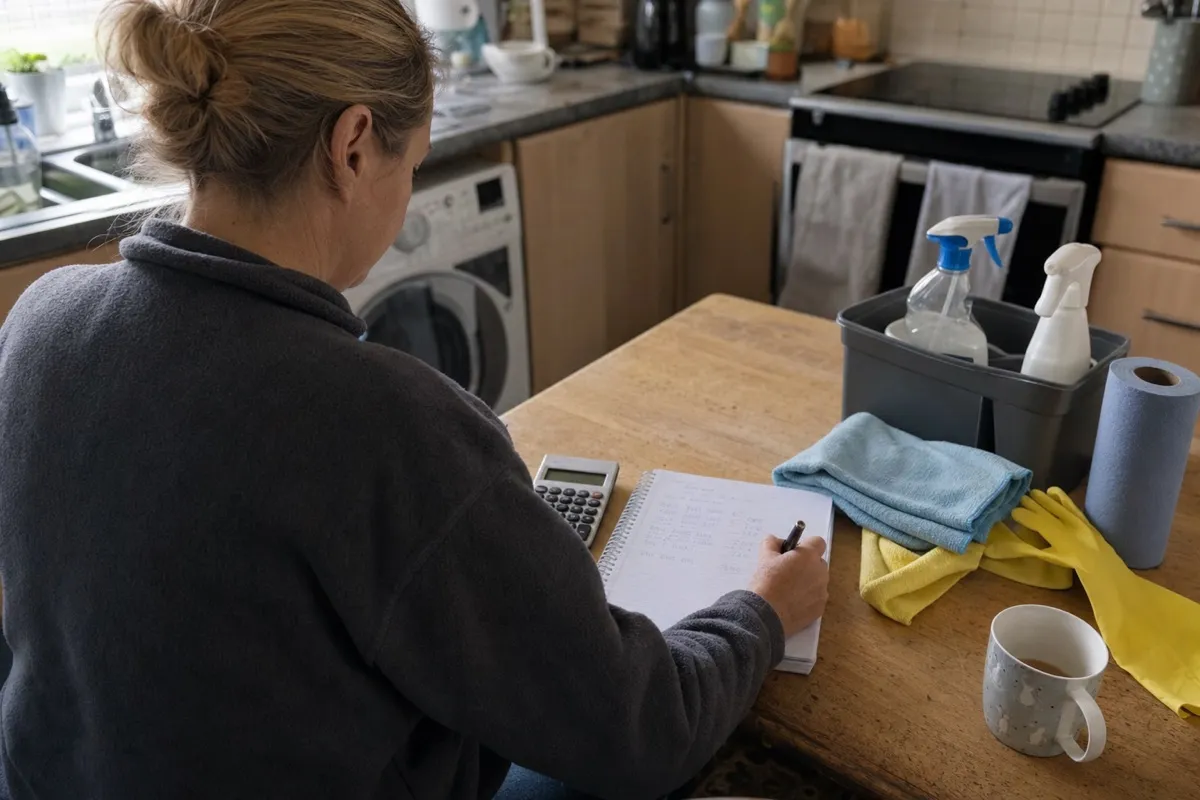
Most Irish cleaners charge between 18 and 30 euro an hour, with self-employed operators clustered around 20 to 25 euro and agencies higher at 28 to 45 euro. Flat job prices run from roughly 60 euro for a small maintenance clean to 350 euro plus for a deep or end-of-tenancy clean. Set yours from your costs, your area and the job type, not a guess.
That is the short version. The longer answer is that the rate you can name depends on how you price, what the job actually involves, and whether you quote in a way that wins the work. Get that wrong and you are either too cheap to make money or too slow to land the booking.
What Irish cleaners actually charge in 2026
Here are the rate bands operators are quoting around the country. Use them to see where you sit, not as a fixed price list. Dublin runs at the top of each band; smaller towns and rural counties sit lower.
| Job type | Typical hourly | Typical flat price |
|---|---|---|
| Regular maintenance clean | 18 to 30 euro | 60 to 110 euro per visit |
| One-off / first deep clean | 22 to 35 euro | 140 to 320 euro |
| End-of-tenancy clean | 22 to 35 euro | 160 to 350 euro |
| Office / commercial | 18 to 28 euro | Often priced per visit on contract |
| Airbnb turnaround | 20 to 32 euro | 50 to 100 euro per changeover |
The spread inside each band is real. A solo cleaner in a country town charging 20 euro an hour and an agency in central Dublin charging 42 are both pricing correctly for their costs. Your job is to know your own numbers and quote to them.
Hourly vs flat vs per-room vs per-square-metre
There are four ways to price a clean, and the right one depends on the job.
- Hourly is simplest and safest for one-offs and anything unpredictable. You get paid for the time it actually takes. The downside is it caps your earnings and makes clients watch the clock.
- Flat / per-job is what most regular clients prefer because they know the cost up front. It only works once you can estimate the property accurately, or you will keep underquoting.
- Per-room is a quick way to build a flat quote: a set price per bedroom and bathroom, plus the kitchen and living areas. Handy for end-of-tenancy work.
- Per-square-metre suits offices and large commercial spaces where rooms are not a sensible unit.
A worked example. Say your target is 25 euro an hour. A regular three-bed takes you two and a half hours, so the flat price is roughly 63 euro. Quote that as a flat fee, not "25 an hour for about two and a half hours", and you look more professional and you protect your rate if you get faster.
Rate bands by job type
The four methods above set the mechanism. The job type sets the band.
Regular maintenance cleans are your bread and butter: recurring weekly or fortnightly visits at 18 to 30 euro an hour, or a 60 to 110 euro flat fee once you know the home. Price these to keep the slot, because the repeat value is the whole point.
Deep cleans are slower and dirtier, so charge a premium: 22 to 35 euro an hour, or 140 to 320 euro flat depending on size and condition. Always see the property or get photos first.
End-of-tenancy cleans are the highest-stakes domestic job. The clean has to pass the landlord's final inspection so the tenant gets the deposit back, so price for that standard: 160 to 350 euro for a typical apartment to family home. Per-room pricing makes these easy to quote.
Office and commercial cleaning is usually contracted: a fixed price per visit or per month rather than per hour, often at 18 to 28 euro an hour equivalent. These jobs come by direct approach and tender, and they are won on reliability, not the lowest price.
Airbnb and holiday-let turnarounds are quick, repeat, time-pressured jobs: 50 to 100 euro a changeover, often with a same-day window. Charge for the urgency and the laundry.
What drives your price up or down
Two cleaners can quote the same house and land 15 euro apart, both correctly. The difference is the factors they load into the price:
- Frequency. Recurring work earns a small discount; one-offs carry a premium.
- Access and condition. Stairs, no parking, heavy clutter and pets all add time.
- Supplies. If you provide products and equipment, build that into the rate.
- Travel. Unpaid driving between jobs is a real cost, so charge more outside your core area.
- Specialism. End-of-tenancy, after-builders and Airbnb work command more than a standard maintenance clean.
Decide which of these apply before you name a number, and the quote stops being a guess.
Common pricing mistakes that kill profit
The fastest way to stay broke while staying busy is to make one of these:
- Underpricing the first job to win it. A cheap client is cheap forever and expects the next quote to match.
- Forgetting your overheads. Fuel, insurance, supplies, phone, admin and your own unpaid time all come out of that hourly rate before you earn a cent.
- No minimum charge. Tiny jobs at a per-hour rate lose money once you count travel.
- Never raising prices. Costs go up every year. If your rate has not moved in two years, you have taken a pay cut.
The quote you never send earns nothing
Here is the part the pricing guides skip. You can have the sharpest rate card in your town and still lose the job to a cleaner who simply answered the phone.
Most cleaning enquiries still come by call, and they come while you are mid-clean, gloves on, hoover running, phone in the other room. The caller does not leave a voicemail. They ring the next cleaner on Google and book with whoever picks up. A perfect price quoted an hour too late is worth exactly the same as no price at all: zero. Every missed enquiry is a job you priced at nothing.
That is why getting paid well starts before the quote. It starts with answering the enquiry. The same logic runs through everything in how to get more cleaning clients: winning the lead is wasted if you cannot convert the call.
So work out your real costs, pick the method that fits each job, and price to the bands above with confidence. Then make sure the phone gets answered every time, because that is where the money is actually won or lost. See how that works for a cleaning business in our overview of call answering for cleaning services.
Frequently asked questions
- How much do house cleaners charge per hour in Ireland?
- Most self-employed cleaners charge between 18 and 30 euro an hour, with 20 to 25 euro the common middle. Agencies charge more, roughly 28 to 45 euro an hour, because that rate covers staff wages, cover, insurance and admin. Treat those bands as what the market pays, then price where your costs and demand put you.
- Is 22 euro an hour a lot for a cleaner?
- Not really. Twenty-two euro an hour sits in the middle of the self-employed band, and after fuel, supplies, insurance, unpaid travel and admin your real take-home is well below that. If you are booked out, that is a clear signal you are charging too little, not too much. Push your rate up on new quotes before you add more hours.
- What should a cleaner get done in three hours?
- A realistic three-hour visit covers a thorough maintenance clean of a small-to-mid home: kitchen surfaces and appliances outside, a bathroom or two, floors throughout, dusting and bins. Scope it to the property before you quote a flat price, because a cluttered four-bed eats three hours fast and turns a tidy-looking job into a loss.
- Should I price one-off and recurring cleans differently?
- Yes. One-off and first-time cleans take longer and carry no repeat value, so charge a premium, often 1.3 to 1.5 times your normal rate. Recurring weekly or fortnightly cleans are faster once you know the property and worth a modest discount to lock in the slot. The recurring book is what makes a cleaning business predictable.
More cleaning services guides
How to get cleaning clients (and stop wasting your marketing spend)
A practical playbook for winning cleaning clients in Ireland - the free and paid channels with the best ROI, plus the step most guides skip: answering the enquiry fast enough to actually book the job.
Best cleaning business software: an Ireland buyer guide for 2026
A vendor-neutral comparison of cleaning business software for Irish operators, covering scheduling, job management, online booking, and the enquiry-intake layer most roundups skip.