
Best auto repair shop software in 2026: a fair-dinkum buyer guide
An independent buyer guide to auto repair shop software for Australian workshops. Compare the real options by job, see pricing in dollars, and find the one layer every vendor leaves out: how the shop answers the phone.

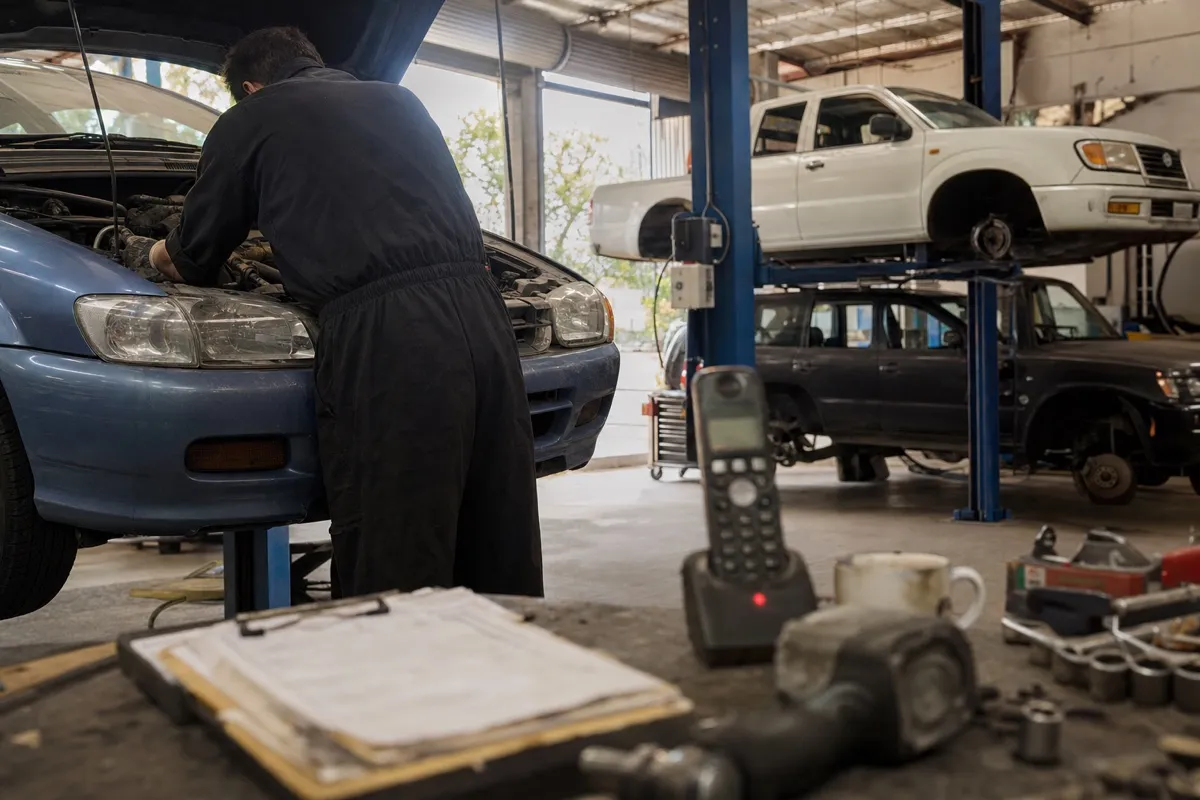
Auto repair shop software is the system that runs the workshop floor: it schedules jobs, builds estimates, creates job cards, orders parts, raises invoices and keeps a history on every vehicle and customer. The best tool for your workshop is the one that suits your bay count, your budget, and the jobs you actually turn all day, not the one with the loudest marketing. Here is an honest comparison of the real options, with pricing, plus the one part of the stack nearly every vendor leaves out.
Most "best software" pages you find are vendor product pages dressed up as buyer guides, or directories that bury the pricing. This one is organised by the job to be done, names real tools fairly, and shows what they cost. Figures are in Australian dollars; some vendors quote in USD, so check the exchange first.
The main options at a glance
| Software | Best for | Pricing |
|---|---|---|
| MechanicDesk | Australian all-in-one, small to mid | From around 100 dollars per month |
| Tekmetric | Cloud all-in-one, growing workshops | From around 300 dollars per month |
| Shopmonkey | Modern UI, multi-location | Tiered, quote-based |
| Shop-Ware | Digital inspections, mid-large | Quote-based |
| ARI | Budget, solo and small workshops | Free tier, then from around 45 dollars per month |
| Orderry | Value all-in-one | From around 60 dollars per user per month |
| Hey Jodie | The front desk: answering the phone | Flat monthly fee |
Prices move, and several vendors bill in US dollars, so always confirm the current tier and the exchange with the vendor. The pattern holds steady: the all-in-one platforms run from roughly 60 dollars a month at the value end up past 300 for a full cloud suite, and none of them answer your phone.
Choosing by job, not by brand
Workshop software gets easier to pick once you stop comparing brands and start comparing the jobs each one does well.
- Scheduling. Keeping bays full without double-booking. Every all-in-one (MechanicDesk, Tekmetric, Shop-Ware) does this; a calendar that maps to bays and techs is the thing to test.
- Estimating. Building a quote fast and accurately, ideally with labour guides and parts pricing built in. The dedicated estimating tools carry the deepest repair data; the all-in-ones bundle a lighter version.
- Invoicing. Turning the job card into a clean, paid invoice. This is table stakes for any auto repair shop invoicing software, so judge it on speed and on whether it pushes to your accounting tool like Xero or MYOB.
- CRM. Holding customer and vehicle history and prompting service reminders. This is where retention revenue hides; the better platforms treat CRM as a first-class feature, not a bolt-on.
For most workshops the honest answer is a single all-in-one that does all four competently, rather than four best-of-breed tools you have to stitch together.
The free and freemium options
"Free auto repair shop software" is a real search for a reason: every owner wants to start cheap. The honest take is that free gets you started but rarely gets you far.
ARI has a genuine free tier, capped on monthly invoices, and there are free or near-free invoicing tools you can bend to fit. What free generally lacks is rego and VIN lookup, integrated parts catalogues, proper labour guides and multi-user access. That is fine for a one-bay startup proving the model. Once you are turning real volume you hit the cap, and the upgrade you were going to pay for anyway arrives. Budget for the paid tier from day one so it is not a surprise.
The layer every vendor leaves out: the front desk
Here is the gap no workshop software vendor will mention. Every tool above starts working the moment a job exists in the system. But a job only exists once someone has answered the phone, understood what the customer needs, and booked it in.
Your workshop management software does not answer the phone. When all the bays are full and the phone rings, that call is invisible to your software, and so is the revenue attached to it. That unbooked call is the same lost money as the unbillable hour we cover in the labour-rate guide: work you advertised for and paid to attract, gone because nobody could pick up.
An AI answering service is the modern version of the front desk. It answers every inbound call instantly, day or night, holds a real conversation, captures the vehicle and the job, and texts the details straight to you, so the call turns into a booking your workshop software can then run. It does not replace your management platform; it feeds it the jobs that would otherwise ring out.
How to pick the right stack for your workshop
Work through it in this order rather than starting from a brand name:
- Size first. One or two bays: a value all-in-one (ARI, Orderry) or a free tier to start. Three or more bays and growing: a full cloud platform (MechanicDesk, Tekmetric, Shop-Ware).
- Pick your one non-negotiable. Heavy on estimating and repair data, lean on the dedicated estimating tools. Heavy on customer retention, prioritise the CRM. Heavy on digital inspections, look at Shop-Ware.
- Check the integrations. It should push to your accounting software (Xero, MYOB) and your parts suppliers so you are not rekeying.
- Then fix the front desk. Whichever platform you choose runs the jobs you capture. Make sure something is actually capturing them by answering the phone.
The right stack is the one that fits your workshop size and the jobs you do, with a front-desk layer in front of it so the calls you paid to attract actually become job cards. For the bigger picture on running the phones, see how Hey Jodie works for mechanics, and for filling the pipeline in the first place, our guide on getting more customers into your workshop.
Frequently asked questions
- What is the best auto repair shop software for a small workshop?
- For a small independent workshop, look for an all-in-one that handles scheduling, estimates, job cards and invoicing in one place, with simple per-bay or per-user pricing. MechanicDesk is a popular Australian option; Tekmetric and Shopmonkey lead the cloud all-in-one market and ARI suits the budget end. Match the tool to your bay count and how comfortable your team is with new tech, not to whoever ranks first on Google.
- Is there free auto repair shop software?
- Yes, but with limits. ARI offers a free tier capped on monthly invoices, and some general invoicing tools are free but lack rego and VIN lookup, parts catalogues and labour guides. Free works for a one-bay startup; once you run real volume you usually outgrow the cap and pay anyway, so factor the upgrade price in from day one.
- What software do auto repair workshops use to schedule and invoice?
- Most workshops run one all-in-one platform that covers both. The common cloud options are MechanicDesk, Tekmetric, Shopmonkey and Shop-Ware; ARI and Orderry serve the value end. Each handles scheduling, estimates, job cards and invoicing in a single workflow, so you are not stitching three separate tools together.
- Does workshop software handle the phone and bookings?
- No. Workshop management software books the job only after someone has already answered the phone and captured it. None of the major platforms answer inbound calls, so a ringing phone while every bay is full is a job your software never even sees. That front-desk layer is the gap an AI answering service fills.
More mechanics & workshops guides
How to get more customers into your auto repair shop
A practical car-count playbook for Aussie shop owners: the marketing that actually books work, what to budget, a one-page plan you can copy, and the leak that wastes the rest.
How to set your mechanical workshop labour rate in 2026
Working out what to charge per hour? Run the break-even maths, nail your effective labour rate, and see what the market pays so every job turns a profit.