
What plumbers charge and earn in 2026: a pricing guide for owners
What the market pays for plumbing work in Australia and what a plumbing business owner actually takes home: typical call-out, hourly and day rates, how to set your own prices, and what quietly eats your margin.


On this page
Australian plumbers typically charge around 90 to 140 dollars an hour, with Sydney nearer the top of that, a day rate of roughly 600 to 800 dollars, and a call-out of about 80 to 150 dollars. Those are what the market pays. What you actually take home is a different, smaller number once costs come out.
This guide is for the person running the business, not the homeowner getting a quote. Most rate articles tell a customer what to expect to pay. This one helps you set your prices and understand where the money really goes.
What plumbers charge and earn in 2026
Here are the rates the market pays across Australia, as benchmarks to price against rather than fixed figures. They move with state, specialism and how urgent the work is. Emergency and after-hours work carries a premium; routine maintenance sits at the lower end.
| Type of charge | Typical Australian range | Notes |
|---|---|---|
| Hourly rate | Around 90 to 140 dollars | Sydney and specialist work run higher |
| Day rate | Around 600 to 800 dollars | Protects you on long or awkward jobs |
| Call-out fee | Around 80 to 150 dollars | Often higher for nights and weekends |
| Emergency premium | 1.5x to 2x standard | After-hours and public holidays |
Treat these as the going rate, not your rate. The going rate tells you whether you are roughly in the right area. It does not tell you whether the number actually pays your bills, which is the part that matters.
How to set your own rates (not just copy the market)
Copying the plumber down the road is the most common pricing mistake there is. You do not know their costs, their overheads or whether they are quietly losing money. Build your rate from your own numbers instead.
Work out your real cost per billable hour first:
- Add up a full year of running costs: ute and fuel, tools, insurance, materials you absorb, software, accountant, and a fair wage for yourself.
- Divide that by the hours you can genuinely bill in a year, not the hours you work. A lot of your week is travel, quoting and admin you cannot invoice.
- That figure is your break-even hourly cost. Anything below it loses money.
Then add your target margin on top. Undercutting to win work is a trap: you end up fully booked at a rate that never builds anything. If you are just starting out, our guide to starting a plumbing business walks through setting that first rate before you ever quote a job.
Hourly vs day rate vs fixed price
Most plumbers use all three depending on the job. The skill is knowing which one protects your margin in each case.
| Method | Best for | The risk |
|---|---|---|
| Hourly | Short, unpredictable repairs | Long jobs feel expensive to the customer |
| Day rate | Full days and awkward, slow work | Underselling a job that finishes early |
| Fixed price | Defined jobs you can scope confidently | A job that overruns eats your margin |
Hourly suits the quick, uncertain repair. A day rate protects you when a job is slow, fiddly or in an awful spot where an hourly figure would undersell the time. Fixed price works when you can scope the job accurately and reward your own efficiency, but only if you have priced in the risk of it running long.
What a plumbing business owner actually earns
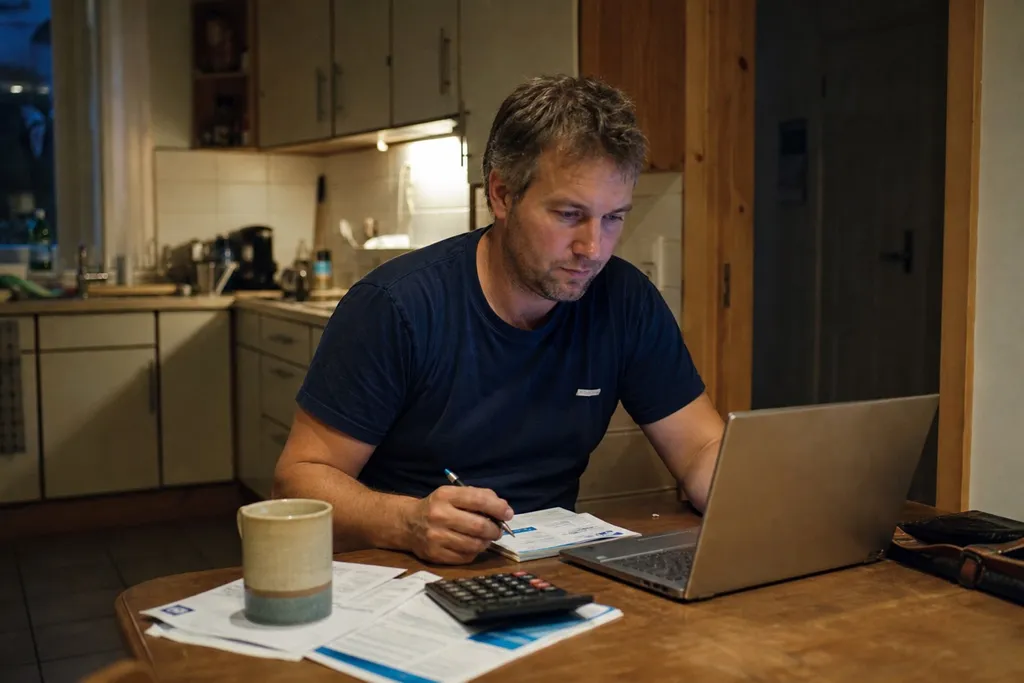
Turnover is not take-home. This is where a lot of owners fool themselves. A solo operator might turn over 120,000 to 180,000 dollars a year, but the figure that lands in your pocket is a good deal smaller once ute, materials, insurance, tax and all your unbilled admin time come out.
Busy is not the same as profitable. Working more hours at a thin rate just makes you tired and poor. Owners who genuinely earn well tend to do three things: price properly, cut the dead time between jobs, and stop losing work they had already won. None of those is about cramming in more hours.
What eats your margin: GST, overhead and dead time
A few quiet costs do more damage to your take-home than the headline rate suggests.
GST catches a lot of growing plumbers off guard. In Australia you must register for GST once your turnover passes the threshold (75,000 dollars at the time of writing). On domestic work, where customers cannot claim it back, adding 10 per cent effectively cuts your competitiveness unless you have planned for it.
Then there is dead time: the travel, the quoting, the chasing of payments, the hours nobody pays you for. Every unbilled hour is margin gone.
The leak nobody prices in: the jobs you never won
Here is the cost that never appears in any rate guide, because it leaves no trace. The single biggest hole in most plumbing margins is not the rate or the GST. It is the work that walked away before you ever quoted it: the enquiry that rang while you were under a sink and went to voicemail, then to the next plumber on Google.
You can set perfect rates and still lose money if a chunk of your enquiries never become jobs. That lost work is pure margin, because you already paid to make the phone ring. We do the full maths in our guide to what missed calls cost a plumbing business, and for most operators it dwarfs the few dollars an hour they agonise over on the rate.
The point is not the exact rate
Your numbers will differ from the benchmarks above, and they should. A higher average job value, a different state, a specialism, or leaner overheads all move the figure. What does not change is the method: build your rate from your real costs, protect your margin with the right pricing method for each job, and plug the leaks before you assume you simply need to charge more or work harder.
Run your own version this week. Your real cost per billable hour, plus the margin you want, tells you what to charge. The enquiries you are losing tell you why busy has not meant profitable. If you want to see how answering every call fits into that picture, start with our overview of call answering for plumbers.
Frequently asked questions
- How do I work out what to charge for plumbing work?
- Work it out from your costs, not from what the plumber down the road charges. Add up your real running costs for a year (ute, fuel, tools, insurance, software, your own wage), divide by the hours you can realistically bill, then add your target margin on top. That number is your true hourly rate. Pricing below it just means you are busy and broke.
- What is a good day rate for a plumber to charge?
- A self-employed plumber day rate in Australia typically sits around 600 to 800 dollars, higher in Sydney and on specialist or commercial work. A day rate protects you on long, awkward jobs where an hourly figure would undersell the time. The right number for you is whichever covers your costs and target margin across a realistic billable day, not the cheapest rate in your area.
- How much does a plumbing business owner actually earn?
- Less than the turnover suggests, and it varies widely. A solo operator might turn over 120,000 to 180,000 dollars a year but take home a good deal less once ute, materials, insurance, tax and unbilled admin time come out. Owners who grow margin do it by pricing properly, cutting dead time and not losing won work, rather than simply working more hours.
- Why is my plumbing business busy but not profitable?
- Usually because the rate is too low, too much of the day is unbilled, or jobs are leaking before they ever reach you. Being fully booked at a rate that does not cover your real costs just locks in the problem. Look at your true hourly cost, your dead time, and the enquiries you never converted before you assume you simply need more work.
More plumbers guides
The real cost of missed calls for an Aussie plumbing business
Most plumbers never tally up what a ringing phone with nobody on it is actually worth. Here is the simple maths, in dollars, and how to stop the leak.

How to start a plumbing business in Australia in 2026: the operator guide
What it takes to start a plumbing business in Australia: the licence and registration to get right, sole trader versus company, setting rates that pay, the ute and tools you actually need, and how to win your first customers.

The best software every plumber needs in 2026
There is no single best plumbing software. Here is an honest, vendor-neutral guide to the categories a plumbing business actually needs, the tools worth knowing, and how to choose without overpaying.