
How to get more pest control jobs: a lead-gen and conversion playbook for NZ operators
A practical playbook for New Zealand pest control operators to generate more leads and actually convert them - local search, reviews, referrals, paid leads, and the missed-call leak that sends after-hours jobs to whoever answers first.

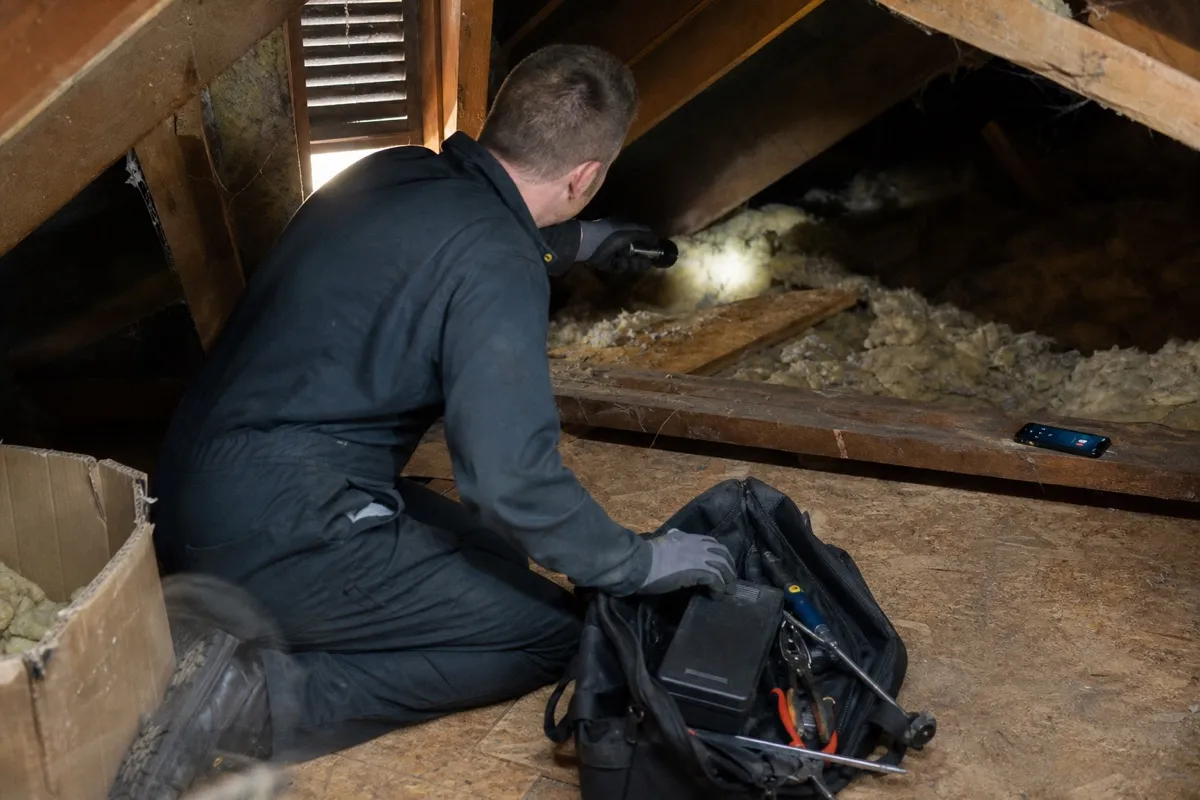
To get more pest control jobs, work both halves of the funnel, not just the top: claim and optimise your Google Business Profile, ask every happy customer for a review, build referral loops with property managers and body corporate managers, decide carefully before buying leads, and answer every call so the demand you create never leaks to a competitor.
Most advice on getting pest control leads stops at that first lever and ignores the rest. That is the gap this playbook is written to close.
Why most pest control lead advice fails
Search "how to get pest control leads" and you will find the same thing over and over: ways to pour more enquiries into the top of the funnel. Run Google Ads. Buy a lead list. Post in local Facebook groups. Optimise for "near me". All of it is fine advice, as far as it goes.
The problem is that it stops at acquisition. None of it asks the obvious next question: what happens when that lead actually rings you? A lead is not a job. A lead is a phone call from someone with a rat in the roof, and you only get paid if you answer it, quote it, and book it in before they ring the next pest controller on the list.
So this playbook covers both halves. The first four steps generate demand. The last two make sure you capture it. Skip the second half and you are paying to fill a bucket with a hole in the bottom.
Step 1: Win local search with your Google Business Profile
For a local trade, the single highest-return marketing asset is free: your Google Business Profile. When someone searches "pest control near me" or "wasp nest removal [suburb]", the map pack at the top of the results is where the clicks go, and your profile is what decides whether you appear there.
Claim and fully complete it:
- Set your exact service categories (pest control service, plus specifics like rodent or wasp control if relevant).
- List the precise suburbs and towns you cover, not just your home base.
- Add real photos of you and your ute, not stock images. People hire a face.
- Keep your phone number and hours bang up to date, because a wrong number here is a lead handed straight to a competitor.
Then back it with a few simple service-area pages on your own website, one per suburb or per pest, so that "rat control in Hamilton" or "bed bug treatment Tauranga" has a page to rank. You do not need a fifty-page site. You need to show Google, clearly, what you do and where you do it.
A profile is not a set-and-forget job, either. Google rewards activity, so post the occasional update, answer the questions that appear on your listing before a competitor does, and reply to every review, good or bad. The "near me" search is now the default way people find a tradie, and the operators who keep their profile alive are the ones who sit in the map pack week after week rather than slipping below the firms who bother.
Step 2: Turn reviews into a lead engine
Reviews are not a vanity metric for a pest controller. They are the deciding factor for a nervous customer choosing between you and the firm next to you on the map, and they directly feed how high your Google Business Profile ranks. More good reviews means more visibility means more calls.
The mistake most operators make is hoping reviews happen on their own. They do not. You have to ask, and the ask has to be easy:
- Ask at the moment the job is done and the customer is relieved and grateful, not a week later.
- Send a direct link to your Google review page by text while you are still on the doorstep.
- Make it a habit on every job, not something you do when you remember.
A steady trickle of recent, specific reviews ("turned up same day, sorted our wasp nest, no fuss") will out-pull a competitor with more stars but nothing posted in two years. Recency and detail win.
Step 3: Build a referral loop
One-off domestic jobs are the hardest, most expensive work to win, because every customer is a stranger you have to find again. The operators who stay busy build relationships that send the same work back month after month without any marketing spend at all.
The richest sources of repeat pest control referrals are the people responsible for other people's buildings:
- Property managers and landlords, who need a reliable controller every time a tenant reports mice or bed bugs.
- Body corporate and facilities managers, who hold contracts across whole portfolios.
- Restaurants, cafes and food businesses, which legally need pest cover and renew it every year.
- Builders and pre-purchase inspectors, who hit infestations mid-project and need someone fast.
Win one of these and you have not won a job, you have won a pipeline. Treat them well, answer their calls instantly, and they will not bother shopping around. This is also where pricing matters: a confident, fast quote keeps the relationship, so it is worth getting your numbers right - our guide on what to charge for pest control walks through callout versus contract pricing.
Step 4: Should you buy leads?
At some point a lead-generation company will offer to sell you enquiries, or an agency will offer to run your marketing for a monthly retainer. The "for free" and "complaints" searches around bought leads tell you what a lot of operators have already learned the hard way, so be clear-eyed about it.
Bought leads can work, but watch for the traps:
- Shared leads get sold to several controllers at once, so you are in a phone race the moment it lands. Speed to answer decides who wins.
- Exclusive leads cost more and are only worth it if you actually call them back within minutes.
- Agency retainers can quietly cost more per booked job than doing the basics in steps 1 to 3 yourself.
Here is the uncomfortable truth about every paid lead: it is only as good as your ability to answer the phone when it rings. Buying more leads while you are still missing calls is the most expensive mistake in the playbook. You are paying twice - once for the lead, and again when it rings out and goes to someone else.
Step 5: Plug the leak by answering every call
This is the step every competitor's article skips, and it is the one that makes all the others pay off. You can do everything right at the top of the funnel and still bleed jobs at the bottom, because pest problems do not keep office hours.
A rat in the kitchen at nine in the evening, wasps over a public holiday long weekend, bed bugs found by a tenant on a Sunday - these are urgent, high-value jobs, and the customer is ringing down a list. The first controller who answers as a human and books them in wins. Everyone after that gets voicemail and never hears back, because the caller has already moved on.
Do the maths on it. Say you miss just three calls a week because you were under a house, driving, or asleep. If one in three of those would have booked, and your average job is two hundred dollars, that is roughly two hundred dollars a week walking to a competitor - north of ten thousand dollars a year, from calls you already paid marketing money to generate.
Speed is the whole game here. A caller with a live infestation is not patient; the research on lead response is brutal and consistent across trades - the business that responds first wins the large majority of the work, and the odds collapse within minutes, not hours. Ringing back the next morning is usually too late, because by then they have already booked whoever answered last night. For a pest controller, "I'll call them back later" and "I lost the job" are often the same sentence.
You cannot answer everything yourself, and you should not try to run cover on your own sleep. What you can do is make sure every call is answered, triaged, and captured, whether you are up a ladder or off the clock. An AI receptionist picks up instantly, asks your triage questions, captures the pest, the address and the urgency, and texts you the genuine emergencies so nothing rings out to a competitor.
Step 6: Pick tools that capture and convert
Once you are generating demand and answering every call, the last lever is the tooling that turns those calls into booked, invoiced, repeat work without you living in a notebook. The right stack schedules the job, holds the customer record, raises the invoice, and keeps your compliance reporting straight.
That is a buyer decision in its own right, and it is worth getting right rather than bolting together whatever is to hand. We break down the scheduling, CRM, invoicing and call-handling options in the best pest control software guide, including where an answering service fits alongside the rest.
Get all six steps working together and the picture changes. You stop chasing leads in bursts and start running a business where demand comes in steadily and almost none of it leaks away. That is the whole point: not just more pest control leads, but more of them turning into jobs. For the bigger picture of how call handling fits a pest control business, see our pest control answering service page.
Frequently asked questions
- How can I generate my own pest control leads?
- Generate your own leads by owning local search and word of mouth: claim and optimise your Google Business Profile, build a few service-area pages for the suburbs you cover, ask every satisfied customer for a review, and set up referral loops with property managers and body corporate managers. Then answer every call those efforts produce, because an unanswered lead is the same as one you never generated.
- How much should you pay for lead generation?
- Bought pest control leads typically run from a few dollars for a shared lead up to thirty or fifty dollars for an exclusive one, and marketing agencies often want several hundred dollars a month on retainer. Before you spend a dollar on more leads, work out how many calls you already miss - plugging that leak is almost always cheaper than buying replacements for jobs you let ring out.
- Do I need a licence for pest control in New Zealand?
- There is no single mandatory pest control licence in New Zealand, but customers and commercial clients expect proof of competence. PMANZ membership and Urban Pest Management (UPM) qualifications are the recognised standards, and you will need approved handler certification under the EPA and the HSNO rules to use many controlled substances. Most operators treat these as essential trust signals even though no single law forces them.
More pest control guides
Best pest control software in 2026: a Kiwi operator buyer guide, by job
A neutral, operator-written guide to the pest control tech stack - scheduling, CRM, invoicing and treatment reporting, and call handling - organised by the job each tool does, with PMANZ standards and EPA-approved substances in mind.
Pest control pricing in New Zealand: what to charge for profit
How to price pest control jobs and contracts for profit in New Zealand: callout and hourly benchmarks, a per-pest price table, where the margin really hides, and how to quote with confidence. Written for the operator, not the householder.