
Plumbing invoicing and job-management software for getting paid without the chase
A vendor-neutral buyer guide to plumbing invoicing and job-management software for New Zealand trades: what each tool is best for, how the per-seat pricing really works, and the booking-and-call layer the vendors all leave out.


Plumbing invoicing and job-management software turns a quote into a scheduled job into a paid invoice, in one place, without retyping anything. For a small plumbing business in New Zealand the right tool is usually a job-management app such as Tradify, Fergus or ServiceM8 rather than a standalone invoicer, because it ties scheduling, quoting, invoicing and payment together. There is no single winner; the right pick depends on your size and the job that hurts most.
This guide compares the real tools on what each is best for, how the per-seat pricing actually works, and the one thing every vendor leaves out: who answers the phone and books the job before it ever reaches the software.
| Tool | Best for | Pricing model | Quoting and payments |
|---|---|---|---|
| Tradify | Solo and small teams who want simple | Per user, per month | On-site quotes, invoicing, pay-by-link |
| Fergus | Small NZ teams who want job costing | Per user, per month (tiered) | Quotes, invoicing, payments |
| ServiceM8 | Solo operators who want simple | Per job credits / tiered | On-site quotes, invoicing, card pay |
| simPRO | Larger multi-crew contractors | Quote on request | Full job costing and invoicing |
| AroFlo | Field-service teams who want depth | Per user, per month | Quoting, invoicing, payments |
What this software actually does
Strip away the brand names and a job-management tool does a short, specific list of jobs. It holds your diary so you stop double-booking. It builds a quote you can send before you have left the customer's driveway. It turns that quote into a job, then into an invoice, without you keying the same details three times. And it gives the customer a fast way to pay.
The reason to buy one tool rather than five separate apps is that the handoffs between quote, job and invoice are where time and money leak. A standalone invoicer is fine if invoicing is your only pain. The moment scheduling and chasing payment also hurt, an integrated app earns its keep.
What to look for as a plumber
Before you compare brands, get clear on the buying criteria that matter on the tools:
- Fast on-site quoting. A quote sent while the customer is still standing in the flooded kitchen wins more work than a tidy one that lands two days later.
- Scheduling and dispatch. A shared diary that stops you double-booking, and that a second ute can see.
- Invoicing and payments. Pay-by-link and card on the doorstep so the money lands in days, not weeks.
- Accounting sync. A clean link to Xero or MYOB so an invoice raised in the ute flows to the books without re-keying, with GST handled correctly.
- Mobile and field use. It has to work one-handed on a phone under a house, not just at a desk.
The main tools compared
Here is an honest line on the names you will actually come across, no single winner crowned.
Tradify and Fergus were both built in New Zealand for trades, which is why they feel local out of the box. They are the natural first paid tools for a solo plumber or a small outfit, doing scheduling, quotes and invoices without a steep learning curve. Fergus leans a little harder on job costing; Tradify stays deliberately simple.
ServiceM8 is another simple, mobile-first option that runs on job credits rather than per-seat pricing, which suits a one-person operation that bills sporadically.
simPRO and AroFlo are heavier platforms aimed at larger contractors with stock, multiple crews and complex jobs. Powerful, but cost and complexity make them overkill for one or two utes.
For gas work, none of these replace your registration: gasfitters are licensed through the Plumbers, Gasfitters and Drainlayers Board, and you still issue a Gas Safety Certificate for the work. Good software just stores the paperwork against the job so it is not floating around the ute.
How the pricing works, and what "free" really costs
Almost all of these tools price per user, per month (ServiceM8 runs on job credits instead). Entry plans for the small-business apps tend to sit in the mid tens of dollars per user; the bigger field-service platforms quote on request and run well above that. Adding seats and features moves the number, so price the plan you will actually be on in a year, not the headline tier.
The trap is treating a free tier as a permanent answer. A plan that limits you to a handful of invoices a month, or makes you copy job details into your accounts by hand, is borrowing time from your evenings at a poor exchange rate. Free is a fine way to trial the workflow; it is a poor way to run a business that is winning work.
The category every stack forgets: answering and booking
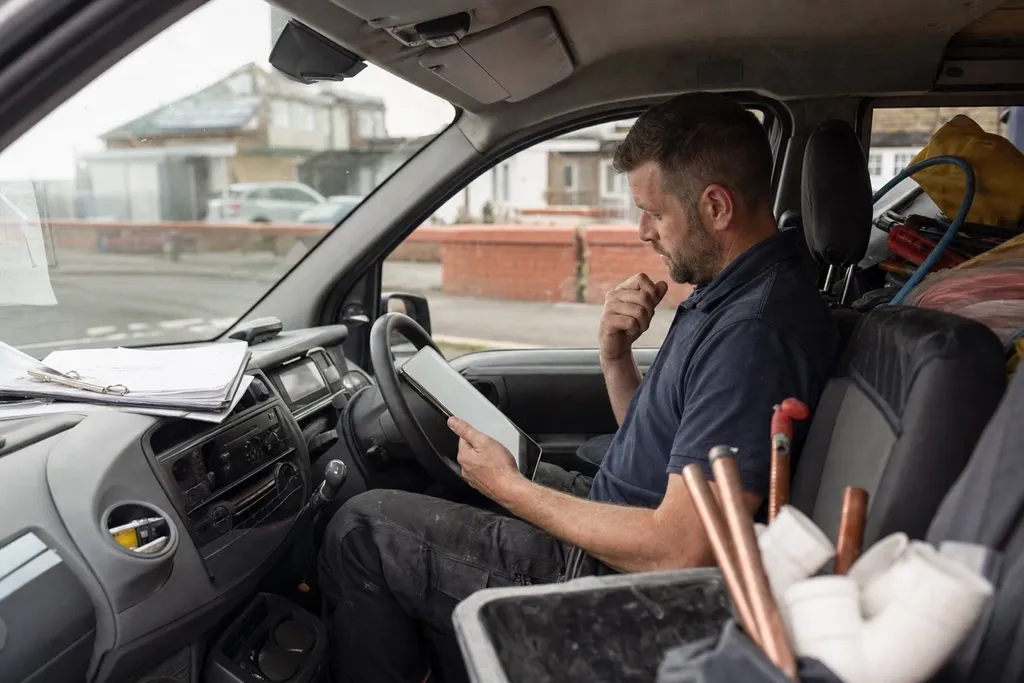
Every tool above manages jobs you already have. Not one of them catches the enquiry that comes in while you are under a sink with both hands full and the phone ringing in the ute.
That missed call is the most expensive gap in the stack, because it happens before any of this software gets to do its job. There is no invoice to raise if the caller hung up and rang the next plumber. Answering and booking is its own category, and it sits in front of everything else. This is the one place we will mention our own corner of it: Hey Jodie answers your calls for plumbers when you cannot, takes the job details, and texts them to you, so the enquiry reaches your job-management app instead of your competitor.
How to choose your stack
Start with the job that hurts most, which for most plumbers is getting paid. Pick the tool that fixes that first, then add the rest as you grow rather than buying everything on day one.
A sensible order: confirm it handles GST and the way you invoice, check that it talks to your accounting software so you are not re-keying invoices, and only then weigh the nice-to-haves. If you want the wider view across every software category a plumbing business touches, not just invoicing and job management, see the full plumbing software guide. And if you are setting all this up from scratch, how to start a plumbing business covers the systems to get right from day one. The best stack is the smallest set of tools that fixes what is costing you money and gets out of your way.
Frequently asked questions
- What software do plumbers use to invoice?
- Most plumbers invoice through a job-management app rather than a standalone invoicing tool. Tradify, Fergus and ServiceM8 all turn a quote into a job into an invoice in one place, often with a pay-by-link button. Some run a simpler setup, raising invoices straight from Xero or MYOB, which works fine until scheduling and chasing payment start eating evenings.
- What is the best job-management software for a small plumbing business?
- For a solo or small plumbing business, Tradify and Fergus are usually the easiest start: both were built in New Zealand for trades, so scheduling, quoting and invoicing feel local. ServiceM8 is another simple option. simPRO fits larger multi-crew contractors that need full job costing. There is no single best, only the one that matches your size and the job that hurts most.
- Is there free plumbing invoicing software?
- Yes, basic free invoicing exists, including the free tiers of some accounting tools, but they cap invoices, users or features and leave you doing the scheduling and chasing by hand. Free beats paid only until the manual workarounds start costing you more time than the subscription would. For most working plumbers that point comes quickly.
- How much does plumbing software cost?
- Most plumbing job-management software is priced per user per month, typically from around forty-five to one hundred dollars per user on entry plans, climbing with extra features and seats. Standalone invoicing or accounting tools sit lower. The bigger field-service platforms like simPRO cost more and quote on request. Always check what the free tier really limits before you rely on it.
More plumbers guides

The best software every plumber needs in 2026
There is no single best plumbing software. Here is an honest, vendor-neutral guide to the categories a plumbing business actually needs, the tools worth knowing, and how to choose without overpaying.

Starting a plumbing business in New Zealand in 2026: the operator guide
A practical guide to starting a plumbing business in NZ: getting registered and licensed with the PGDB, sole trader versus company, setting rates that pay, the ute and tools you really need, and how to win your first customers.
What plumbers charge and earn in 2026: an owner pricing guide
What the market pays for plumbing work in New Zealand and what a plumbing business owner actually takes home: typical call-out, hourly and day rates, how to set your own prices, and what quietly eats your margin.