
The true cost of a missed call for a roofing business
You pay for every roofing lead, then you are up on the roof when it rings. Here is what each missed call costs a New Zealand roofer, and how to stop the leak.

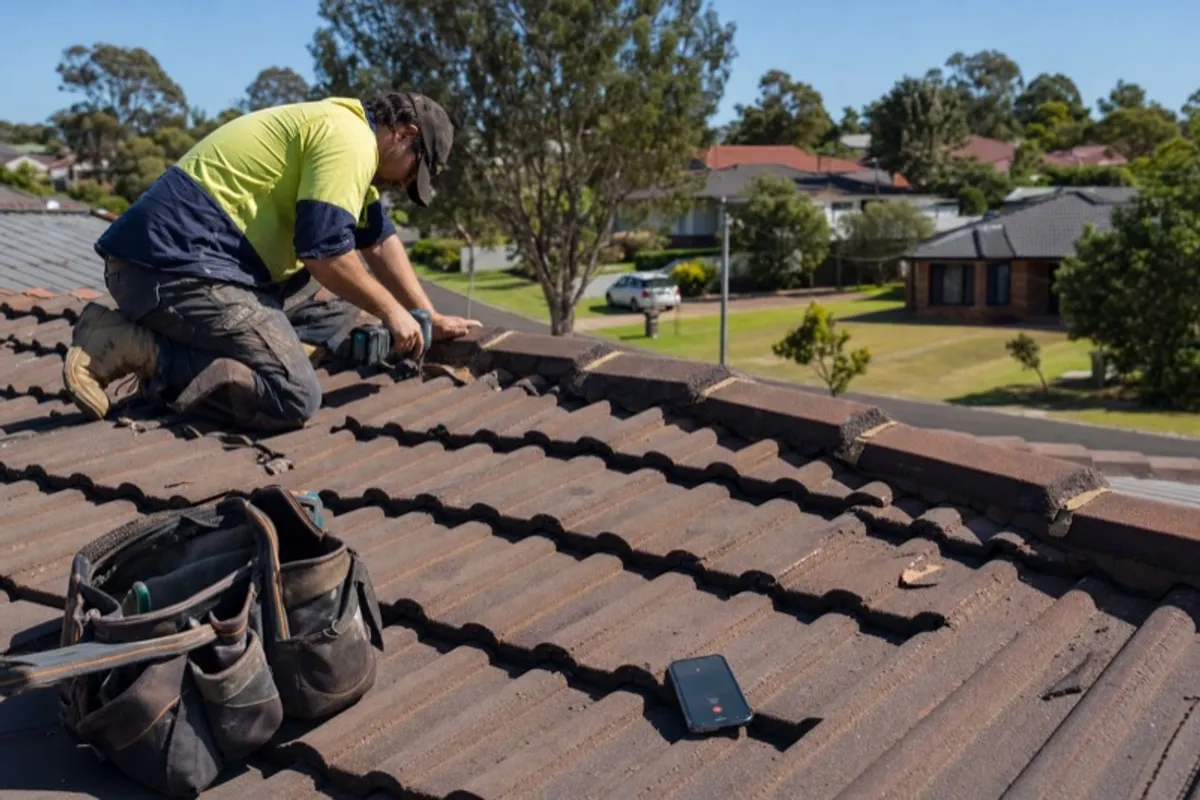
A roofing lead in New Zealand costs roughly NZ$50 to NZ$70, whether you buy it or earn it through Google Ads. So a missed call is not just a lost job. It is money you already spent to make the phone ring, sent straight to voicemail while you were up on a roof. The leak is real and measurable.
What a roofing lead is actually worth
Before you can see the cost of a missed call, you need to know what a lead is worth. And roofing leads are not cheap.
Buy them from a pay-per-lead site and you are paying dollars per enquiry, often shared with two or three other roofers. Generate them yourself through Google Ads and the cost per click on roofing terms runs high, easily into the tens of dollars a click. Either way, you are looking at something like NZ$50 to NZ$70 to make one phone ring.
Here is the part that stings: that money is spent the moment the phone rings, not the moment you answer. So if you let it ring out, you have already paid full price for a lead and got nothing back.
Why roofers miss more calls than most trades
Roofers do not miss calls because they are careless. They miss them because of where the job happens.
- You cannot answer a phone with both hands on a sheet of long-run steel and a nail gun in reach.
- You are up scaffolding or on a ladder, and stopping to dig out a phone is not safe.
- You are driving between jobs or the supplier, often with no signal on the roof itself.
- When a southerly blows through, ten people ring in the same hour and one phone cannot take them all.
Most trades can at least step aside to take a call. A roofer physically cannot, for hours at a stretch. That is exactly why the missed-call problem is worse in roofing than almost anywhere else.
The maths: what one missed call costs
Let's do the sum the lead sites never put in front of you. Say you have paid around NZ$60 for a lead, and the job behind it, a repair or a section of new roof, is worth somewhere around NZ$1,600 once you factor in a typical day rate of NZ$450 to NZ$600 plus materials.
- You spent about NZ$60 to make that phone ring.
- The call comes in while you are on a roof, and it goes to voicemail.
- The homeowner does not wait. They tap the next roofer on Google and book them.
- You have now lost the NZ$60 of spend and the NZ$1,600 job behind it.
- Multiply by three or four missed calls a week and that is roughly NZ$4,800 to NZ$6,400 of work gone, every week, on top of the lead spend you keep paying.
Even if only half of those callers would ever have booked, the number is brutal. You are not losing the price of the lead. You are losing the job, and often the repeat work and word-of-mouth that came with it.
Missed calls after hours and at weekends
A lot of roofing work is not planned. A sheet lifts in a gale, a flat roof starts letting water in overnight, flashing fails when the rain drives in sideways. Those calls land in the evening, at the weekend, in the middle of the night.
That is precisely when there is no chance of you answering, and precisely when the caller is most desperate to reach someone. An after hours answering service catches those emergency enquiries instead of dumping them into a voicemail box nobody checks until Monday, by which point the roof has been fixed by someone else.
What it costs to fix it versus what it costs to ignore it
Put the two numbers side by side. On one side, the cost of making sure every call gets answered. On the other, the cost of the jobs you lose by not answering. For most roofing businesses that is not a close contest.
| Voicemail | Call back later | Hire a receptionist | Hey Jodie | |
|---|---|---|---|---|
| Answers every call | Sort of | No | Business hours only | Yes, 24/7 |
| Catches storm and out-of-hours jobs | Rarely | No | No | Yes |
| Captures the job details | Rarely | If they answer | Yes | Yes |
| Monthly cost | Free | Free | A full salary | Low |
| Caller reaches a real conversation | No | No | Yes | Yes |
Voicemail feels free, but it loses you paid-for leads, so it is the most expensive option on the list. A receptionist answers beautifully and then clocks off at five, missing every storm call. The gap, every call answered without a full-time wage, is exactly where an AI answering service sits.
Speed to lead: the roofer who answers first wins
There is one rule under all of this. The roofer who answers first wins the job. Not the best one, not the cheapest one, the first one to pick up.
That is true of every lead channel: you can pour money into ads, directories and reviews, but if the call rings out, you have funded a job for a competitor. Generating the lead is the expensive half. Capturing it is the cheap half, and the half most roofers skip because they are, quite literally, on a roof.
Work out your own number this week: your average job value, times the new-customer calls you reckon you miss. Whatever falls out the bottom is roughly what answering every call is worth to you. If you want to see how that works for a roofing business, start with our overview of call answering for roofers.
Frequently asked questions
- How much does a roofing lead cost?
- A roofing lead in New Zealand typically costs between NZ$50 and NZ$70, whether you buy it from a pay-per-lead site or generate it through Google Ads. That is what you spend just to make the phone ring. If the call then goes to voicemail, the money is gone and the job goes to whoever picked up.
- How do you get roofing leads without paying?
- The cheapest leads come from a Google Business Profile, genuine reviews, repeat customers and referrals. They cost time rather than money. The free advantage almost nobody uses is simply answering faster than the next roofer, because the homeowner books the first person who actually picks up.
- How much do roofers charge per day in New Zealand?
- A working roofer day rate is commonly around NZ$450 to NZ$600, and a full job runs to several hundred dollars or into the thousands. That is the figure sitting behind every enquiry, which is why a single missed call is worth far more than the lead you paid for.
- Is an answering service worth it for a roofing business?
- If you miss even a couple of new-customer calls a week, the lost jobs dwarf the cost of cover. An answering service pays for itself the moment it saves one job you would otherwise have sent to a competitor by going to voicemail.
More roofers guides
How to get more roofing leads: a New Zealand playbook
Where roofing leads really come from in New Zealand, ranked by cost and conversion, and the final step most guides leave out: picking up the phone.
The best roofing software for NZ operators (and the layer the directories skip)
A straight, priced buyer guide to the roofing software stack a New Zealand operator actually needs, from measurement and estimating to CRM and scheduling, plus the front-of-funnel layer the directories ignore: who answers the call.