
What to charge for pest control in Ireland: a pricing guide for operators
How to price pest control jobs and contracts for profit in Ireland: callout and hourly benchmarks in euro, a per-pest price table, where the margin really hides, and how to quote with confidence. Written for the operator, not the householder.

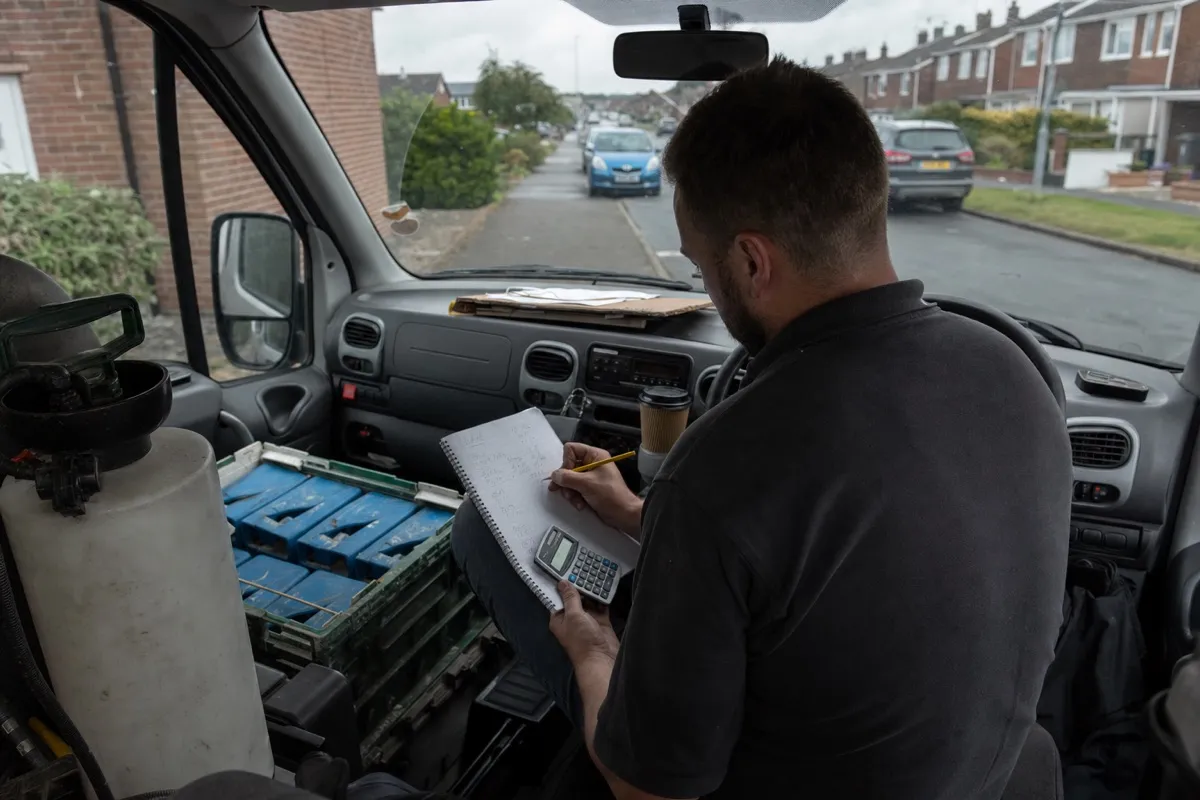
A standard residential pest control callout in Ireland typically runs from around 90 to 280 euro, with a common one-off treatment landing near 150 to 200 euro and recurring contracts priced per visit on top. But the number you quote is not the money you keep. Set your price from your costs and the margin you need, not from whatever the firm down the road is charging.
This guide is for the person running the business, not the householder getting a quote. It gives you the going rates as benchmarks, then the part nobody publishes: how to price a callout and a contract for profit, where the margin actually hides, and how to quote fast enough to win the job.
What pest controllers actually charge
Treat the figures below as the going market rate, not your rate. They move with the pest, the property, the region and how many visits the job needs. A single wasp nest is quick and cheap; bed bugs, recurring rodents and commercial work carry more visits, more chemical and more risk, so they command more.
| Pest / job | Typical price | Visits | Notes |
|---|---|---|---|
| Wasp nest | Around 80 to 150 euro | One | Quick, seasonal, high volume |
| Rats or mice | Around 110 to 280 euro | Two to three | Often a baiting programme, not one hit |
| Bed bugs | Around 250 to 600 euro | Two to three | Heat or chemical, labour-heavy |
| Fleas | Around 100 to 200 euro | One to two | Treatment plus prep advice |
| Cockroaches | Around 170 to 380 euro | Two to three | Recurring, common in commercial |
| Commercial contract | Around 35 to 70 euro per visit | Recurring | Monthly or quarterly, billed annually |
The benchmark tells you whether you are in the right area. It does not tell you whether the figure covers your costs and pays you a wage, which is the part that matters and the part the rest of this guide works out.
Per job, per hour, or per contract
There are three ways to price pest control work, and the one you lean on decides how profitable the business is.
- Per hour. Easy to explain, but it punishes you for being good. Get faster at reading a rat run and you earn less for the same result. Keep hourly only for the odd open-ended commercial job and as the internal rate you build quotes from.
- Per job. A fixed price for a defined outcome: clear the wasp nest, run the rodent programme, treat the home for fleas. The customer sees one clear number, and any time you save is your profit, not a discount. This is how most callouts should be priced.
- Per contract. Recurring visits for a monthly or quarterly fee, usually billed annually. Lower per-visit, but guaranteed revenue, predictable routing and almost no cost to win the next job once the customer is on the books.
Contracts are where the real margin sits. A one-off callout costs you a sale every single time, but a commercial kitchen or an apartment block on a quarterly contract pays you for years off a single win. Price contracts to keep the customer, and let the steady revenue carry the quiet stretches between emergency callouts.
Where the margin actually is
The reason a healthy-looking price can still leave you short is everything it has to pay for before a cent becomes wage. As a sole operator or small firm, your price carries all of this:
- Chemicals and consumables. Rodenticides, insecticides, bait stations, traps, monitors and protective gear, plus the safe disposal that goes with them.
- The van. Finance, fuel, insurance, motor tax, servicing and the kilometres between jobs.
- Licensing and training. Professional pesticide use is regulated by the Department of Agriculture, Food and the Marine, and professional users must register and hold the relevant certification. Membership of the Irish Pest Control Association is not legally required, but customers and commercial clients expect the competence it signals, and keeping certification current costs time and money.
- Insurance. Public liability is non-negotiable, and it is not cheap once you are handling regulated chemicals on other people's property.
- No-shows and the unbilled hours. Quoting, travel, follow-up visits baked into the price, and the customer who is out when you arrive.
Run a 150 euro callout through that list and you can see why volume alone does not make a profitable firm. The operators who do well are not the cheapest. They price the full cost in, hold a real margin on top, and lean on recurring contracts so the overhead is covered before the first emergency callout of the month even rings.
How to build a profitable quote
The cleanest way to price is cost-plus-margin: build the number up from what the job actually costs you, then add a margin on top. Here are two worked examples.
A one-off rat callout, two visits to bait and check:
- Chemicals and bait stations: around 25 euro.
- Labour: two visits at roughly an hour on site plus travel, say 2.5 hours of your effective time at a 65 euro internal rate, around 162 euro.
- Overhead share: van, fuel and a slice of insurance and licensing for the time the job ties up, around 38 euro.
- Subtotal around 225 euro. Add a 25 percent margin and you quote 281 euro. Round to 275 to 300 euro and you have a price that covers cost, pays you properly and holds profit.
A quarterly commercial contract for a small restaurant:
- Four visits a year, around 45 minutes on site each plus monitoring and a digital report.
- Cost per visit, all in, around 38 euro including chemical, travel and admin.
- Price each visit at 60 to 70 euro, billed as an annual contract of roughly 250 to 280 euro.
- Lower per-visit than a callout, but it is guaranteed, it routes neatly alongside other local accounts, and it costs you nothing to win the next quarter.
That is the "pricing calculator" people search for, done the only way that actually works: not a magic number, but cost plus overhead plus margin, checked against the market benchmark in the table above.
Pricing mistakes that cost you jobs
A few pricing habits quietly drain a pest control firm, and they are easy to fix once you can see them.
- Underquoting to win the job. The cheapest quote wins a customer who leaves for the next cheapest quote. Price for margin and win on response and reliability instead.
- No emergency premium. A wasp nest over a child's bedroom on a Sunday is worth more than a routine weekday visit. If your out-of-hours and same-day jobs are priced the same as everything else, you are giving away your most valuable slots.
- Forgetting the overhead. Quoting "an hour plus chemical" with no share of van, insurance and licensing means the busy months never quite turn into a good year.
- The silent one: quoting a job you never answered the phone for. The most expensive pricing mistake is not a number at all. It is the emergency callout that rang while you were up in an attic and went straight to the next firm on Google.
Quote fast, or lose the job
You can build the cleanest pricing model in the trade and still finish the year short, because a price only earns out on jobs you actually win. Pest control is an urgent purchase: someone with rats in the kitchen or wasps by the door is not browsing, they are ringing down the list until somebody picks up.
So the firm that answers first usually wins, almost regardless of price. The perfect quote does nothing for the call you never took. Every missed call is a job you priced perfectly and handed a competitor for free, and it is the leak we dig into in our guide to getting more pest control jobs.
The point is not the exact number
Your figures will differ from the worked examples, and they should. A different region, a heavier reliance on commercial contracts, leaner overheads or pricier chemical all move the number. What does not change is the method: build the price from chemical, labour, overhead and margin, then check the result against the going market rate, not the other way round.
Run your own version this week on the next job you quote. The benchmark table tells you whether you are in the right ballpark, the cost-plus-margin method tells you what to actually charge, and the calls you miss tell you why a fair price has not turned into a fair year. For more on closing that last gap, see how call answering for pest control firms fits in, and our roundup of the best pest control software for the tools that keep your quoting, scheduling and invoicing tight.
Frequently asked questions
- How much do pest controllers charge in Ireland?
- A standard residential pest control callout in Ireland typically runs from around 90 to 280 euro depending on the pest and the number of visits, with a common one-off treatment landing near 150 to 200 euro. Wasps and ants sit at the lower end; bed bugs and recurring rodent jobs at the higher end. Use those figures as a market benchmark to sanity-check your own quotes, not a rate to copy, because what you should charge depends on your costs and your margin.
- How much is pest control per hour?
- Most independent pest controllers work to an effective hourly rate of around 50 to 90 euro once travel and admin are loaded in, though almost nobody quotes the customer by the hour. The sustainable figure has to cover your van, chemicals, insurance, licensing and the unbilled time between jobs, not just your minutes on site. Price the job or the contract as a fixed number built up from that rate, so a fast job becomes your profit rather than a discount.
- Should I charge per job or per hour?
- Charge per job, not per hour, for almost everything. A fixed per-job price hides your speed, protects your margin when a treatment goes quickly, and gives the customer one clear number to say yes to. Hourly billing punishes you for being efficient and invites the customer to watch the clock. Keep an hourly rate only as the internal figure you build your quotes from, plus the odd time-and-materials commercial job.
- How do I price a contract versus a one-off callout?
- Price a one-off callout to cover the full cost of that single visit plus your emergency premium, because you may never see that customer again. Price a recurring contract on the lifetime of the relationship: a slightly lower per-visit rate is worth it for guaranteed monthly or quarterly revenue, predictable routing and far lower cost to win the next job. Contracts are where the real margin lives, so quote them to keep the customer, not just to win the first visit.
More pest control guides
How to get more pest control jobs: an Irish operator's lead-gen and conversion playbook
A practical playbook for Irish pest control operators to generate more leads and actually convert them - local search, reviews, referrals, paid leads, and the missed-call leak that sends after-hours jobs to whoever answers first.
Best pest control software in 2026: an Irish operator buyer guide, by job
A neutral, operator-written guide to the pest control tech stack - scheduling, CRM, invoicing and treatment reporting, and call handling - organised by the job each tool does, with IPCA standards and DAFM-registered products in mind.