
Best veterinary practice management software in 2026: a buyer's guide
A vendor-neutral look at veterinary practice management software for US clinics: a real comparison table of the main PIMS by practice size, cloud vs on-premise, how pricing actually works, and the one job every system leaves to your front desk - answering the phone.

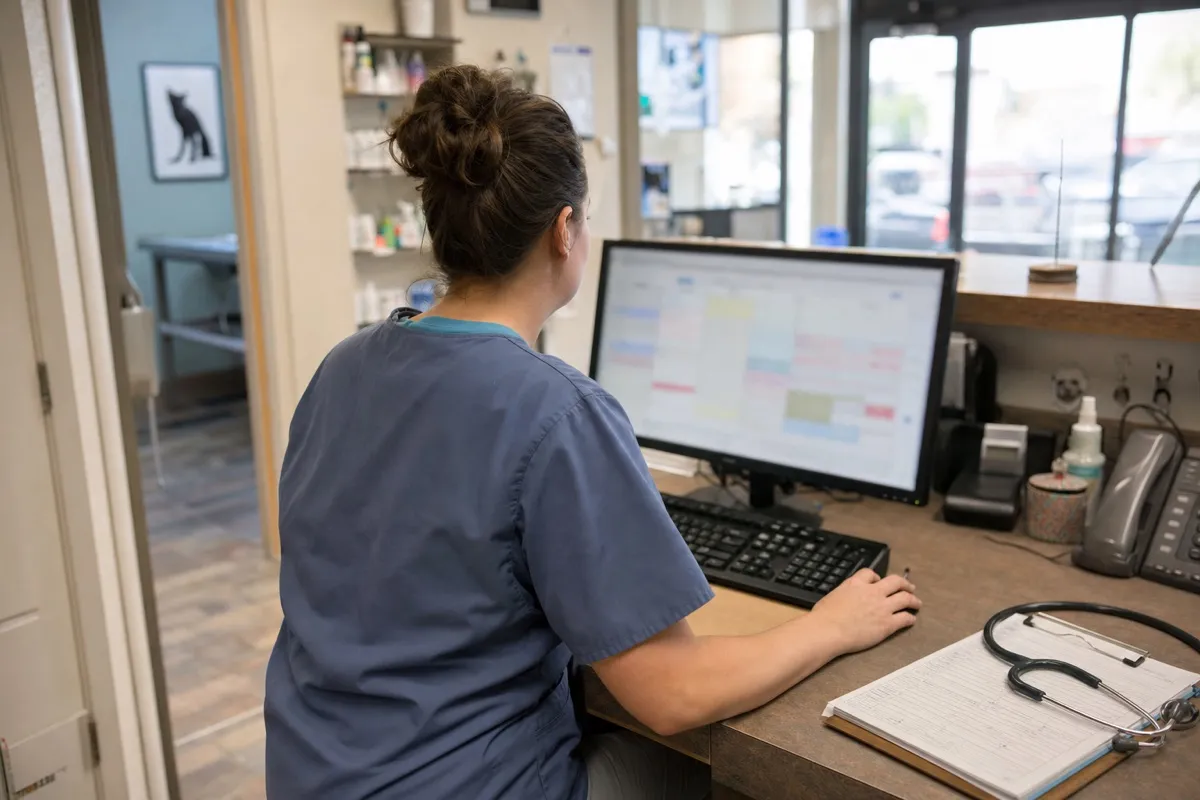
There is no single best veterinary practice management software - the right pick comes down to your practice size and the integrations you depend on. For most growing or multi-location clinics, ezyVet and Digitail lead the cloud-native field; IDEXX Neo and Provet Cloud suit lab-heavy practices; Covetrus Pulse fits supply-led ones; Instinct is built around clinical workflow.
Picking a PIMS is one of the bigger calls a practice owner makes, and page one of the search results does you no favors. Almost everything that ranks is either a vendor pitching its own system or a directory listing star ratings with no pricing and no side-by-side. So here is the table nobody else publishes, then an honest walk through each option, what it costs, and the one front-of-house job none of them do.
The shortlist at a glance
This is the comparison the directories will not give you: the main systems by who they suit, where they run, and how the pricing works. Use it to draw a shortlist, then trial two.
| System | Best for | Cloud or on-prem | Pricing posture | Answers the phone? |
|---|---|---|---|---|
| ezyVet | Growing and multi-location practices | Cloud | Per-user subscription, paid setup | No |
| Digitail | Modern, client-comms-led clinics | Cloud | Per-user subscription | No |
| IDEXX Neo / Provet Cloud | Lab and diagnostic-heavy practices | Cloud | Subscription, often bundled with diagnostics | No |
| Covetrus Pulse | Supply and pharmacy-led practices | Cloud | Subscription, supply ecosystem | No |
| Instinct | Workflow and treatment-sheet focus | Cloud | Per-user subscription | No |
| Cornerstone / AVImark | US practices wanting on-premise control | On-premise | Upfront license plus support | No |
Every column matters except the last one, which reads the same down the page. We will come back to that.
What to look for in a PMS
Before you start weighing brands, get clear on the criteria. Five things separate a good fit from an expensive mistake:
- Cloud vs on-premise. Where your records live changes cost, IT burden, and how you reach them. More on this below.
- Integrations. Your in-house lab, reference labs, imaging, payment processing, and accounting all need to talk to the PMS. The integrations you cannot live without should drive the shortlist.
- Client communication. Reminders, recalls, confirmations, and follow-ups. Some systems do this well natively; others lean on bolt-ons.
- Mobile and field access. If you do house calls, mobile, or large-animal work, you need the record in your hand on the road.
- Data migration. Moving years of patient history off your current system is the part owners underestimate most. Ask exactly what gets migrated and what it costs before you sign.
The main systems compared
There is no single best system, so treat this as a shortlist tool rather than a ranking.
ezyVet is a mature cloud platform that scales well across busy and multi-location practices, with deep integrations and strong reporting. The trade-off is that the breadth comes with a learning curve and a setup cost.
Digitail is cloud-native and modern, with client communication and a mobile app built in. It suits practices that want a clean, app-led experience; check that its integration list covers your specific lab and diagnostics.
IDEXX Neo and Provet Cloud are broad cloud systems with the obvious pull of tight IDEXX lab and diagnostic integration. If your diagnostics already run through IDEXX, the joined-up workflow is a real advantage.
Covetrus Pulse is cloud-based and strongest where the practice also buys supplies and pharmacy through the wider Covetrus ecosystem. Weigh how much of that ecosystem you actually use.
Instinct is built around clinical workflow and treatment sheets, which makes it a favorite in higher-acuity, ER, and referral settings. It is more specialized than the all-rounders.
Cornerstone and AVImark remain common on-premise choices for US practices that want their data and control on-site rather than in the cloud.
Cloud vs on-premise
This is the first real fork, and for most new buyers it decides the field.
| Cloud | On-premise | |
|---|---|---|
| Upfront cost | Low - subscription | Higher - license plus server |
| IT burden | Vendor-managed | Yours to maintain |
| Access | Anywhere, any device | On-site (or via remote setup) |
| Backups | Automatic, offsite | Your responsibility |
| Updates | Pushed automatically | Manual, scheduled |
On-premise still wins for practices that want full control of their data and have the IT support to run it. But the recurring server, backup, and support burden is why most new buyers now choose cloud, where the vendor carries the maintenance and you reach the record from anywhere.
How the pricing works
Most cloud systems charge per user or per vet, per month, with a separate one-off setup and data-migration fee. On-premise carries a larger upfront license plus the cost of a server, backups, and ongoing support. Either way, the sticker price is rarely the whole story.
For a full breakdown of what each line item costs in dollars - software, the receptionist seat, and the calls you miss - see our guide to what a veterinary front desk really costs.
The job no PMS does: answering the phone
Look back at that first table. Every system manages the patients you have already booked - records, scheduling, billing, reminders. Not one of them answers the phone.
That is not a flaw in the software; it is simply a different job. But it is the job that decides whether the schedule fills. When the front desk is on hold, mid-appointment, or closed for the night, the call still comes in - and a vet call is often urgent, anxious, and ready to book. An unanswered one is a booked appointment lost, no matter how good the PMS behind it is.
That is why the front-of-house phone layer sits alongside your PMS, not inside it. Your practice management system runs the back office; an answering layer makes sure the call that fills the schedule actually gets answered. Hey Jodie does exactly that for veterinary practices - it picks up every call, day or night, takes the details, and passes them to your team to book.
How to choose
Start with two things: your practice size and the integrations you cannot live without. Those two filters cut a long list down to a two-system shortlist fast.
- Solo or small single site: favor a lean cloud system with low setup and simple migration.
- Growing or multi-location: ezyVet or Digitail handle scale and reporting.
- Lab or diagnostics-led: weight IDEXX Neo or Provet Cloud for the integration.
- Want on-site control: Cornerstone or AVImark and the on-premise route, with eyes open on the IT burden.
Then trial two, not five, and migrate a sample of records to test the part that usually goes wrong. Once the back office is sorted, the next question is the one the software cannot answer: filling the schedule it serves. That comes down to making the phone ring with more clients for your practice - and making sure every one of those calls gets answered.
Frequently asked questions
- What software do most vet clinics use?
- Most independent and group practices run one of a handful of systems: ezyVet and Digitail (cloud-native, popular with growing and multi-location clinics), IDEXX Neo and Provet Cloud (broad cloud platforms with deep lab integration), Covetrus Pulse (cloud, strong on the supply and pharmacy side), and Instinct (built around clinical workflow). Cornerstone and AVImark remain common on-premise choices in the US. The right one depends on practice size and the integrations you cannot live without.
- What is veterinary PIMS software?
- PIMS stands for practice information management system (also called a PMS or VPMS). It is the central digital record for a veterinary practice: patient and client records, SOAP clinical notes, appointment scheduling, billing and invoicing, inventory, and reminders. It runs the back office. It does not answer your phone or book the appointments that come in by call.
- What is the best cloud-based veterinary software?
- There is no single winner. For most growing or multi-location practices ezyVet and Digitail are the strongest cloud-native picks; IDEXX Neo and Provet Cloud suit clinics that want tight lab and diagnostic integration; Covetrus Pulse fits practices that also buy supplies and pharmacy through Covetrus. Shortlist on practice size, your must-have integrations, and migration support, then trial two.
- Is there free veterinary practice management software?
- Genuinely free, full-featured veterinary PMS is rare. Most "free" offers are limited free tiers, trials, or entry plans that cap the number of users, patients, or features, with the real cost arriving once you need integrations, multi-user access, or support. Budget for setup and data migration too, which are often the largest first-year line items.
- Does practice management software answer the phone?
- No. Every PMS manages the patients you have already booked - records, scheduling, billing - but none of them picks up when a client calls. When the front desk is slammed or the practice is closed, an unanswered call is a booked appointment lost, and that is a front-of-house job the software simply does not do.
More veterinary clinics guides
The real cost of a veterinary front desk: software, staff, and missed calls
An honest operator breakdown of what a veterinary front desk costs a practice owner: practice management software pricing, the true cost of a receptionist seat the software cannot replace, and the lost-appointment math on the calls nobody answers.
How to get more clients for your veterinary practice
A no-nonsense growth playbook for independent veterinary practice owners: which marketing channels actually pay back, how to win on reviews and word of mouth, and why the demand you spend money to create is wasted if nobody answers the phone.

The best practice management software for therapists in 2026
A named-author, vendor-neutral comparison of EHR and practice management software for a solo or small therapy practice: how scheduling, notes and billing really stack up, what each tool costs, and the call-and-booking layer that sits alongside the EHR.