
How to get more clients for your veterinary practice
A no-nonsense growth playbook for independent veterinary practice owners: which marketing channels actually pay back, how to win on reviews and word of mouth, and why the demand you spend money to create is wasted if nobody answers the phone.

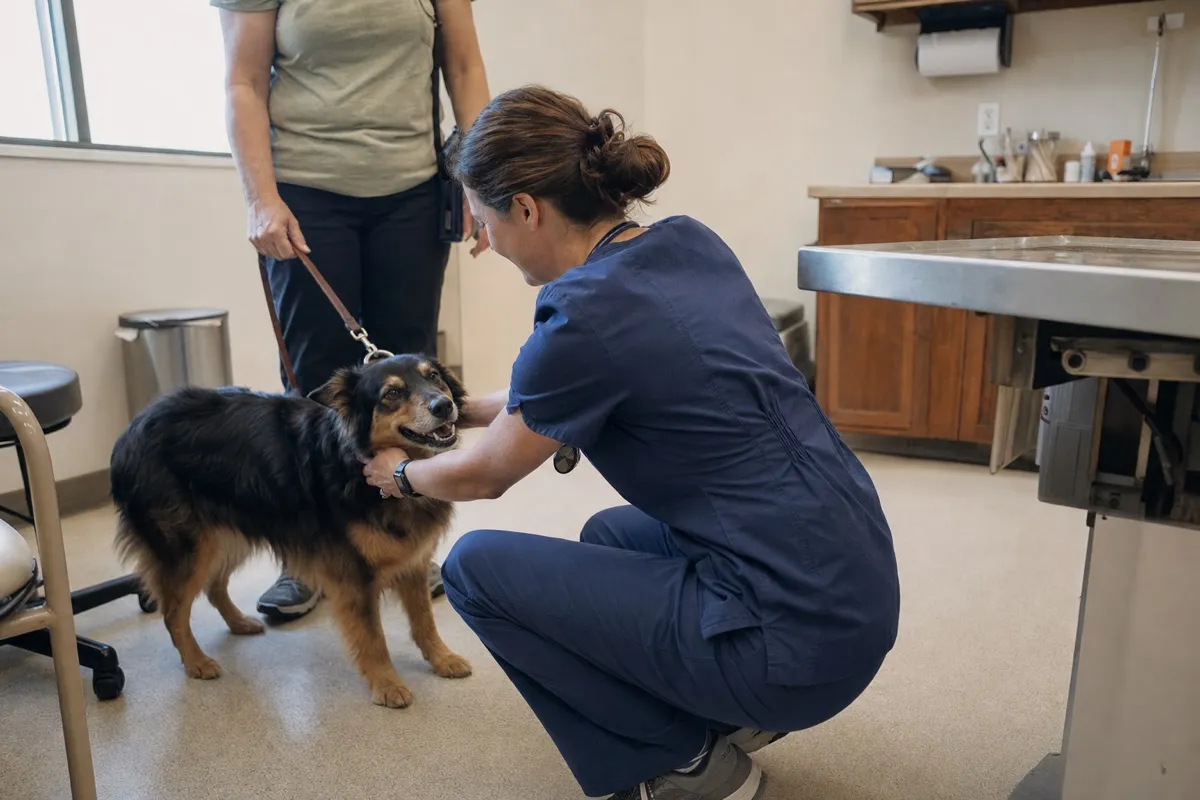
Want more clients through the door? Effective veterinary marketing keeps the clients you already have with recall and reviews, wins local search with an optimized Google Business Profile, and adds paid channels only once those convert. Then fix the step every marketing guide skips: answer every call, because a veterinary practice books new clients on the phone, not the day an ad goes live.
Most advice on this topic is written by agencies selling the marketing they describe, and almost none of it mentions what happens to the demand once it phones. This is the playbook for an independent practice owner who wants more clients without torching the budget - and it ends on the one channel the big chains ignore.
Keep the clients you already have first
The cheapest new client is the one you never lost. Before you spend a dollar on acquisition, plug the leaks in retention, because winning a lapsed client back costs far more than keeping them booked in the first place.
Veterinary client communication is where most of that value lives:
- Run a reliable recall and reminder system for vaccinations, dentals, and wellness exams - by text, not just mail, because text gets read.
- Follow up after a procedure or a tough appointment. A short check-in call or message is the kind of care owners remember and tell their friends about.
- Book the next appointment before the client leaves the exam room wherever it makes sense, so the relationship never goes quiet.
A practice that holds onto its clients and gets them back through the door on schedule grows faster than one constantly topping up a leaking bucket with expensive new sign-ups.
Win on reviews and word of mouth
For most single-location practices this is the highest-return channel there is, and it is effectively free. When someone searches "vet near me" or "emergency vet [city]", Google shows a map pack of three local results, and review count and recency feed that ranking directly.
To compete for the map pack and the trust that comes with it:
- Claim and fully complete your Google Business Profile - hours, services, emergency coverage, photos of the team and the clinic.
- Keep your name, address, and phone number identical everywhere they appear online.
- Systematize the review ask. Request it at the moment of relief - a successful treatment, a recovered pet - and make it one tap with a short link or QR code.
A steady flow of recent, specific reviews beats a wall of old five-stars. For something as emotional as a pet's health, the practice with warm, recent reviews wins the nervous first-time owner every time.
Your website and local SEO
Your website does not need to be a work of art. It needs to load fast, show your phone number above the fold, make becoming a new client obvious, and tell Google what city you serve.
The basics worth doing yourself:
- A clear page for each main service - vaccinations, spay and neuter, dentals, emergency care - with your city in the page titles.
- An obvious "new patients" or "new clients" call to action, and your phone number on every page.
- Consistent local details that match your Google Business Profile exactly.
This is worth keeping in-house or with an inexpensive local developer. Where you might outsource is technical SEO and content at scale, but only once the profile, reviews, and phone answering are already converting. There is no point ranking higher for calls you do not pick up.
Paid and social channels (and when an agency is worth it)
When the free channels are working and still not enough, paid search is the fastest tap to open. Google Ads put you above the map pack for high-intent searches like "emergency vet" or "new puppy shots [city]", and social builds awareness for wellness plans and new-client offers.
Go in clear-eyed about cost per click on competitive local veterinary terms - which is exactly why capturing the resulting calls matters so much. At those prices, an unanswered call is money set on fire.
An agency is worth it when you genuinely cannot give paid search and SEO the time they need, and you have the volume to justify the retainer. Be honest about what it buys you, though: scale on channels you could run yourself, not a cure for a quiet schedule.
The acquisition tactics, ranked
If you want a simple order of operations - cheapest cost per new client first - this is it:
- Answer every call. The demand you already pay to create only counts if someone picks up.
- Recall and reminders. Get existing clients back on schedule before they drift.
- Reviews. A steady flow of recent Google reviews lifts ranking and converts the nervous owner.
- Referrals. Ask happy clients directly; a warm referral converts above any cold channel.
- Google Business Profile and local SEO. Free visibility at the exact moment of search.
- Your own website. Fast, clear, with the phone number and the new-client path obvious.
- Paid search. The fastest tap, once everything above is already converting.
- Social and brand. Useful for awareness and high-value services, slowest to pay back.
Notice the top of that list. The cheapest new clients are not bought - they are the demand you already have, captured properly.
Stop leaking the demand you already paid for
Here is the part the big chains never write. You can have the best Google profile in town, a wall of reviews, and a healthy ad budget, and still lose new clients every single day - because the phone is one person on one line, and that person is in an exam, on lunch, or gone home by six.
A new pet owner rarely signs up through a web form. They call to ask about availability, fees, or whether you can see a sick puppy today. If that call hits voicemail, the new client you paid to create walks to the clinic across town - and a missed call at 7pm or on a Sunday is a booked appointment you never even knew you lost. The full cost of the front desk and the calls you miss is the number that should sit behind every line of your marketing budget, and the software running your practice does nothing to catch them.
This is the gap an always-on answering layer is built for. It picks up every call instantly, answers the routine questions, captures the details, and books straight into your schedule - in the exam room, after hours, and on the weekend - so the demand your marketing creates actually turns into registered clients.
You cannot grow a practice with a phone that goes to voicemail. Get the marketing driving calls, then make sure not one of them is lost - that is the whole game. For the bigger picture of how always-on call handling fits a busy practice, see the call-handling side of running a veterinary practice.
Frequently asked questions
- How do I get more clients for my veterinary practice?
- Start with the clients you already have - recall reminders, follow-up, and a system for asking happy owners for reviews - because retaining and referring beats buying cold demand on cost per new client. Then claim and optimize your Google Business Profile, build a steady flow of recent reviews, and add paid search only once those convert. The step almost everyone skips: answer every call. A veterinary practice wins most new clients over the phone, so the cheapest acquisition channel you own is simply picking up.
- How much should a veterinary practice spend on marketing?
- Most independent practices land somewhere between 2 and 5 percent of revenue, leaning higher when you are opening a new location, rebranding, or pushing a service like dentals or wellness plans. The percentage matters far less than where it leaks. The spend is wasted the moment a new-client call rings out at lunch or after six and the owner phones the clinic across town. Fix your call answering before you raise the budget.
- What is the most effective veterinary marketing channel?
- For most single-location practices the highest-return channel is a fully optimized Google Business Profile backed by recent reviews, because that is where local pet owners search and decide. Recall and referrals from your existing client base come a close second on cost per new client. Paid search works, but only once your profile, reviews, and phone answering are already converting the demand they create.
- Do I need a veterinary marketing agency?
- Not to get started. You can run the highest-return channels in-house: claim your Google Business Profile, ask every happy owner for a review, run a tight recall and referral system, and make sure every call is answered. An agency mainly buys you paid-search and SEO scale once the fundamentals are working. What an agency cannot fix is the unanswered phone - that is the leak that quietly wastes whatever they charge you.
More veterinary clinics guides
Best veterinary practice management software in 2026: a buyer's guide
A vendor-neutral look at veterinary practice management software for US clinics: a real comparison table of the main PIMS by practice size, cloud vs on-premise, how pricing actually works, and the one job every system leaves to your front desk - answering the phone.
The real cost of a veterinary front desk: software, staff, and missed calls
An honest operator breakdown of what a veterinary front desk costs a practice owner: practice management software pricing, the true cost of a receptionist seat the software cannot replace, and the lost-appointment math on the calls nobody answers.

How to get more dental patients (without losing the calls)
Where new dental patients actually come from, ranked by cost and conversion, and the final step the agencies leave out: capturing the phone call your marketing already paid for.