
AI receptionist vs answering service: what it costs an Irish business in 2026
An Irish comparison of AI receptionists and human call answering services, with dated euro prices where providers publish them, an honest account of the quote-only market, and the bill at 20, 50 and 100 calls a month.


On this page
- The short answer
- AI receptionist
- Human call answering service
- What each one actually is
- Call answering service (a person in a remote office)
- AI receptionist (software that holds the conversation)
- Voicemail and auto-attendants (what you have now)
- What "virtual receptionist" actually means
- Voicemail, AI and a human answering service side by side
- What each one actually costs in Ireland
- The same business at 20, 50 and 100 calls a month
- Where a human genuinely wins
- Where AI genuinely wins
- Running both
- What Irish law expects of you, either way
- Five calls to test before you choose
- So which one should you choose?
- Sources
An AI receptionist is software that answers your calls, holds a conversation, and can book jobs, take messages or transfer callers. A call answering service is remote people answering in your name, mostly taking messages. In Ireland there is a third difference that decides most comparisons before they start: the AI products publish a price, and the human services almost all quote.
The short answer
The two look alike from the outside. Your phone gets answered either way. Underneath they behave nothing alike.
AI receptionist
How it works: software picks up, talks to the caller, and finishes the call - booking the job, taking the message or transferring it.
Availability: 24 hours a day, weekends and bank holidays included, with no premium for nights.
Capacity: several calls at once. A Monday-morning burst does not create a queue.
Cost: usually a flat monthly fee. Some products meter per call or per minute instead - check which you are buying.
Best for: businesses that miss calls while working or closed and mainly need every call answered, captured and acted on.
Human call answering service
How it works: a trained person in a remote office answers in your business name, follows your script, and sends you the message.
Availability: varies by plan, and the entry tiers are often weekday hours. Round-the-clock cover usually costs more.
Capacity: one call per available operator. Busy periods mean hold time.
Cost: a monthly tariff plus a charge per call or per message relayed, usually established by a quote rather than a rate card.
Best for: calls that need real judgement, empathy or a relationship - and businesses that want a person on the line, whatever it costs at volume.
What each one actually is
Worth pinning down, because the labels get used loosely and the loose usage is where buyers get burned.
Call answering service (a person in a remote office)
A team of receptionists - usually shared across many client businesses - answers your overflow or diverted calls in your name. They take the caller's details, follow any instructions you have set, and send the message by email or text. Some will book appointments or transfer calls, usually on dearer plans. You are paying for people's time, which is why the billing unit is the call, the minute or the message.
AI receptionist (software that holds the conversation)
Software answers the call itself and talks with the caller in ordinary language. The caller says what they want; the AI asks the follow-up questions, then finishes the job - books the appointment, captures the lead, texts you the details, or transfers the call to you. No rota, no queue, no per-operator limit. The good ones hand off gracefully when a call is beyond them; the cheap ones just take a message, which makes them an expensive voicemail.
Voicemail and auto-attendants (what you have now)
Voicemail is what most Irish small businesses actually run today, and it answers instantly - badly. Most callers with a job to place hang up and ring the next business rather than leave a message. An auto-attendant is the "press 1 for sales" menu: nobody answers, nothing is captured, the caller self-routes or gives up.
What "virtual receptionist" actually means
Be careful with this term, because it is doing three jobs at once. Depending on the vendor, "virtual receptionist" means a remote person answering your calls (Kendlebell, Office Assist and the other established Irish brands), an AI receptionist, or a phone-system menu sold under a friendlier name. One of the Irish services even lists "virtual receptionist" as a 35 euro add-on to a call answering plan, which tells you how elastic the label has become.
That is why price comparisons in this category are so often nonsense: a menu, a 40 euro message tariff and a full human answering contract get lined up in the same column as if they were the same product.
Ask any vendor one question: who or what actually speaks to my caller? A person, software, or a recording? The answer sorts every product in the market into the right box - and tells you which pricing model you are about to sign up to.
Voicemail, AI and a human answering service side by side
Voicemail is the real incumbent, so it belongs in the table. Hiring in-house is a different decision again: roughly 2,800 to 3,200 euro a month once PRSI is counted, which is why it is not a column here.
| Voicemail | AI receptionist | Human answering service | |
|---|---|---|---|
| Who answers | Nobody - a recording plays | Software that talks | A person in a remote office |
| Speed to answer | Instantly - then most callers hang up | Seconds, every time | Depends on the queue at busy times |
| Availability | 24/7 | 24/7, no premium for nights | Often weekday hours on entry plans; 24/7 costs more |
| Calls at once | Unlimited | Several at once | One per available operator |
| End of the call | A message, if the caller leaves one | Job booked, message taken or call transferred | A message, sent to you to action |
| Pricing model | Free | Usually flat monthly; some meter per call | Tariff plus per call or per message |
| Is the price published? | Nothing to publish | Usually yes | Rarely - most of the market quotes |
| Cost when you get busy | Free - you just lose the callers | A flat plan does not move | The meter runs; the bill jumps |
| Empathy and judgement | None | Limited - the good ones escalate instead | Real, and the strongest reason to pay for one |
| Consistency | Same recording every time | Same answers on call 1 and call 100 | Varies by operator and shift |
| Calendar and CRM | No | Often built in | Sometimes, and often a paid add-on |
| Setup time | Minutes | Same day to a few days | A briefing period, days to weeks |
| Transfer to a person | No | The good ones transfer to you or a team | Already a person; transfers to you |
| When it does not understand | Nothing to misunderstand | Takes a message or transfers - ask how before buying | Asks the caller, or passes on a garbled message |
If your trade has its own version of this decision, we have run it in detail for plumbers weighing an answering service against voicemail and a receptionist and for estate agents doing the same.
What each one actually costs in Ireland
This is where most comparison pages fall apart, so here are the numbers as the providers published them on 25 August 2026. Assume figures exclude VAT at 23 per cent unless a provider says otherwise, and ask before you sign.
Human call answering first.
| Provider | Published price | Billing model | Worth knowing |
|---|---|---|---|
| Office Assist | From about 40 euro/mo | Per message relayed | Monthly rolling contract; charges for messages relayed, not calls received |
| Kendlebell | No rate card published | Quote, via a call-volume calculator | Lists a 35 euro/mo virtual receptionist add-on and 30 euro/mo diary management |
| UK and US brands selling into Ireland | Priced in sterling or dollars | Per call or per minute | Check which currency lands on your statement and who holds the number |
Notice what that table quietly tells you. The Irish human answering market is a quote market. That is a comparison dimension in itself: if a supplier will not put a number on a page, the only way to compare it with anything is to send both sides the same call volume and ask for a total.
Now the AI receptionists, same date.
| Provider | Published price | Billing model | Worth knowing |
|---|---|---|---|
| Jodie | Flat from 49 euro/mo | Flat monthly, in euro | Unlimited minutes, no per-call charge, no minimum term |
| Smith.ai AI Receptionist | Free tier $0; Pro $150/mo | Per call, in US dollars | Free tier covers 25 calls, then $3.00 a call; about 138 euro for the Pro tier |
| Goodcall | $79 to $249 per agent per month | Flat in US dollars, with a customer allowance | Roughly 73 to 229 euro; unlimited minutes, charged per unique customer past the allowance |
| RingCentral AI Receptionist | From $49/mo standalone | Per minute above 100 included | Overage $0.50 a minute; check euro availability before you plan around it |
Two more traps in the small numbers. First, the cheap tier on both sides buys a different product - at the human low end you get message taking only, and at the AI low end you often get no booking and no transfer. Second, watch what the meter counts: a service that bills per message relayed is cheap on the calls it decides not to relay, which is fine until you find out which ones those were.
The same business at 20, 50 and 100 calls a month
Headline prices hide the thing that actually decides this choice: the billing unit. So here is the same business at three volumes, assuming a typical 2 to 3 minutes per call.
Because the Irish human services quote rather than publish, that row is arithmetic at an assumed 2.50 euro a message on a 40 euro tariff. It shows the shape of the curve; it is not a quote from anyone.
| Plan type | 20 calls/mo | 50 calls/mo | 100 calls/mo |
|---|---|---|---|
| Flat AI plan (Jodie, 49 euro flat) | 49 euro | 49 euro | 49 euro |
| Flat AI plan in dollars (Goodcall entry tier) | About 73 euro | About 73 euro | About 73 euro |
| Per-call AI plan (Smith.ai, cheapest tier for the volume) | 0 euro | About 69 euro | About 184 euro |
| Per-message human service (worked at 2.50 euro plus a 40 euro tariff) | About 90 euro | About 165 euro | About 290 euro |
Read it honestly. At 20 calls a month everything on that table is affordable, and a free or metered AI tier is genuinely the cheapest thing in the room. The human service is not far behind, and if your twenty calls are the kind that need a person, the gap is not the point.
The divergence is what matters. Between 50 and 100 calls the per-call and per-message meters roughly double, and past that they keep climbing, while a flat plan does not move. If your volume is growing - or just spiky, because a burst-pipe week and a quiet week bill very differently on a meter - the flat model is the one you can budget. That is the case for a flat-rate plan: not that AI is always cheaper, but that it is the only model whose price does not depend on how good your month was.
Where a human genuinely wins
Anyone selling AI who tells you it wins every call is selling, not advising. There are calls a person handles better, and if your business takes a lot of them, that should steer your choice.
- Bereavement and distress. A funeral director's phone, a vet's phone on the worst day of a pet owner's life, a tenant reporting something frightening. These callers need a person, not a well-handled script.
- Safeguarding disclosures. If a caller might disclose harm - care providers, children's services, some landlords - a trained human must hear it and act on it.
- Regulated advice. Where a wrong answer is a liability - legal, financial, clinical - you want a person who knows exactly where the line is, or a service that takes a message and nothing more.
- The caller who is the relationship. A small human team can come to recognise your regular callers and greet them by name. No AI service we reviewed for this comparison offers that.
- Very low volume, very high variety. If you get six calls a week and no two are alike, there is not enough repetition to script. A person absorbs that variety; software handles it less gracefully.
None of this is an edge case. It is a real slice of many businesses' call sheets, and it is why the hybrid setups below exist.
Where AI genuinely wins
The other side of the ledger is just as concrete.
- Out of hours, at no premium. An after hours phone answering service is usually a paid upgrade; with AI, evenings, weekends and bank holidays are covered by default. Several human services charge extra for 24/7 or drop to voicemail overnight.
- Speed, every time. The call is answered in seconds on the first ring of the day and the last. No queue, no hold music.
- Bursts. Three calls in the same five minutes are three answered calls, not one answered call and two voicemails.
- Consistency. The hundredth caller gets the same accurate answers as the first. No off day, no new starter reading the notes.
- Finishing the job. The better AI receptionists book the appointment into your calendar rather than taking a message about someone who would like an appointment.
- Instant follow-up. The details arrive by text before you are back in the van, so you can respond while the lead is still warm.
If most of your calls are "can you come and quote", "are you open", and "I need to book in", this list is your call sheet.
Running both
The honest answer for a lot of businesses is not either-or. Common setups: AI answers first for speed and cover, with calls that need judgement escalating to a person; or people answer in office hours and AI takes evenings and weekends. Some providers sell the hybrid as one product.
Two things to check before you build one. Who owns and controls the phone number, because that determines how easily you can change either half later. And how the handoff actually works - whether a live caller is transferred mid-call or the second service just receives a message. A hybrid on paper that drops the caller in the gap between two suppliers is worse than either on its own.
What Irish law expects of you, either way
Whichever model answers your phone, the legal duties stay with you. Under the GDPR and the Data Protection Act 2018 you are the data controller for your callers' information, and the answering provider - human or AI - is your processor. Article 28 means a written data processing agreement, not just a subscription.
Beyond that, the duties are the same ones the Data Protection Commission sets out for any call handling.
- Recordings and transcripts are personal data. You need a lawful basis to hold them, a retention period, and a way to include them in a subject access request.
- Tell callers the call is recorded. A short notice at the start of the call is the accepted approach, and most services - human and AI - can play or say one.
- Marketing calls fall under the ePrivacy Regulations 2011. If the service makes outbound marketing calls for you, the consent rules apply and you must respect the opt-out preferences subscribers record through the National Directory Database.
- Know where the call data lives. Many AI providers host recordings in the United States. That is workable with a valid transfer mechanism, but it is your job to check which one applies and to say so in your privacy notice.
None of this should put you off either model - it is the same homework for both. The point is to do it once, in writing, before the first call is answered.
Five calls to test before you choose
Every provider demos well. Run your own test calls - on a trial, a demo line, or a friend's account - and judge what actually happens.
- The 2am burst pipe. Call out of hours with an emergency. Does anything answer at all? Can it tell an emergency from a quote request and treat them differently? Good answer: the call is picked up in seconds and the emergency reaches you or an escalation path, not a mailbox.
- The strong regional accent. Have the thickest accent you know place a booking, and give an Irish address with an Eircode. Good answer: no repeated "sorry, can you say that again", and the details come through correct.
- The angry existing customer. Complain, firmly. Good answer: it stays calm, does not argue, and gets the call to a person - yours or theirs - with the context attached.
- The price shopper. Ask "how much for X". Good answer: it captures the caller's details and the job before talking numbers, rather than reading a rate card to someone you will never hear from again.
- The wrong number and the cold caller. Good answer: dealt with in seconds - and on a metered plan, check whether you just paid for it. Spam counting toward your calls is a real cost.
Five calls, twenty minutes, and you will know more than any comparison page can tell you - including this one.
So which one should you choose?
Go by three things: your volume, your call types, and how much of the job the answer has to finish.
- Low volume, high-judgement calls - regulated work, distressed callers, clients who expect to be recognised: a human answering service earns its meter. Push for a written per-call rate and the VAT basis before you sign.
- Growing or spiky volume, mostly bookable work - quotes, bookings, "are you open": an AI receptionist on a flat plan answers faster, works nights for free, and holds its price when the meter would be running.
- Both kinds in real numbers: run AI-first with human escalation, or split the clock between them.
If you have decided you want AI, here are the best AI receptionists compared. If you would rather a person answered, here are the answering services compared. And if the deciding factor is what the bill looks like at your volume, our pricing page shows the flat-rate side of the table in full.
Either way, decide from your own call sheet, not from a headline price. The right answer is the one that matches how you actually lose calls today.
Sources
Prices and product details in this guide were taken from each provider's own live pages: Office Assist, Kendlebell, Smith.ai, Goodcall and RingCentral, all checked 25 August 2026. Jodie prices are from our own pricing page. Guidance on data protection duties is from the Data Protection Commission, checked 25 August 2026.
Frequently asked questions
- What is the difference between an AI receptionist and a call answering service?
- An AI receptionist is software that answers your calls, holds a conversation, and can book appointments, take messages or transfer the caller. A call answering service is a team of remote people who answer in your business name and mostly take messages. The practical differences are what happens at the end of the call, the pricing model (flat monthly versus per call or per message), and hours of cover.
- Is an AI receptionist worth it for a small Irish business?
- Usually, if you currently miss calls while working, driving or closed - one recovered job a month tends to cover a flat monthly fee. It is not worth it if your calls are mostly complex, emotional or regulated, where a person handles them better, or if you rarely miss a call at all. The honest test is your missed-call count, not the technology.
- How much does an AI receptionist cost in Ireland?
- Jodie is a flat 49 euro a month with unlimited minutes and no per-call charge. Most other AI receptionists sell into Ireland in US dollars: at rates published in August 2026, Smith.ai has a free tier covering 25 calls then $3.00 a call, with a $150 paid tier, and Goodcall runs from $79 to $249 per agent per month. Converted at roughly 0.92, that $79 tier is about 73 euro.
- How much does a call answering service cost in Ireland?
- Very few Irish providers publish a full rate card. Office Assist lists call answering from about 40 euro a month on a monthly rolling contract, charged on messages relayed rather than calls received. Kendlebell prices by a call-volume calculator rather than published tiers, with add-ons listed at 35 euro a month for virtual reception and 30 euro for diary management. Expect to ask for a quote and to confirm the VAT basis.
- Is AI replacing receptionists?
- Not wholesale. AI is taking over the message-taking layer of the job - answering, capturing details, booking simple appointments - especially overnight and in overflow. It is not replacing receptionists whose value is judgement, relationships and front-of-house work, and the established Irish brands still sell human answering as their core product. The realistic picture is reallocation: AI takes the repetitive calls, people keep the difficult ones.
- Can an AI receptionist handle complex or emotional calls?
- No - not well enough to be trusted with them. A bereaved or distressed caller, a safeguarding disclosure, or a call that needs regulated advice should reach a person. What a good AI receptionist can do is recognise it is out of its depth and transfer the call or take a careful message. That handoff behaviour is exactly what you should test before you buy.
- Can you use an AI receptionist and a call answering service together?
- Yes, and it is often the strongest setup: AI answers first for speed and out-of-hours cover, and calls that need judgement escalate to a person - either your own team or a human service. Before combining two suppliers, check who controls the phone number and how a live call is actually handed over.
- Why will Irish answering services not publish a price?
- Because the bill depends on your call volume and what you want done with each call, and quoting lets them price that individually. It is not sinister, but it does make comparison work harder. Ask three questions of every quote: the monthly fee, the charge per call or per message, and whether the figures include VAT at 23 per cent. Those three numbers make any two offers comparable.
- Does GDPR apply when software answers my calls?
- Yes, and the duties are yours, not your supplier's. You are the data controller for your callers' information and the answering provider is your processor, so Article 28 requires a written contract before the first call. Recordings and transcripts are personal data: you need a lawful basis, a retention period and a way to meet access requests, callers should be told the call is recorded, and if recordings are stored outside the EEA you need a valid transfer mechanism.
More guides
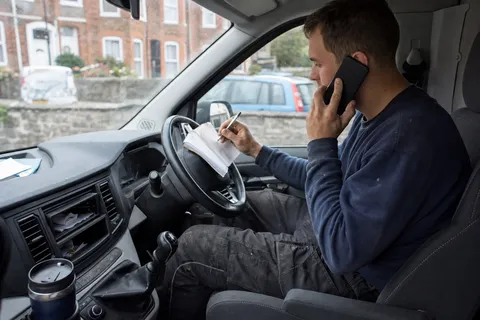
Voicemail, callbacks, a receptionist or an answering service: what suits a plumber?
Four ways to deal with the phone when you cannot pick it up, and a straight look at what each one costs an Irish plumber and which one actually wins.

Estate agent call handling: answering service vs voicemail vs receptionist
Voicemail, an in-house receptionist, a traditional answering service, or an AI receptionist. An even-handed look at how each option handles an estate agency phone, what it costs, and what it misses.

Best Answering Service with CRM Integration in Ireland (2026)
An honest guide to choosing an answering service that integrates with your CRM in Ireland, with real euro costs, how calls sync into HubSpot, Salesforce and your stack, and how to weigh AI against a human service.