
The real cost of a dental front desk (and the price of every missed call)
The receptionist wage on the job ad is the small number. Here is the loaded cost of a dental front desk - salary, payroll taxes, benefits, PTO and absence cover - weighed against the new-patient calls that roll to voicemail.

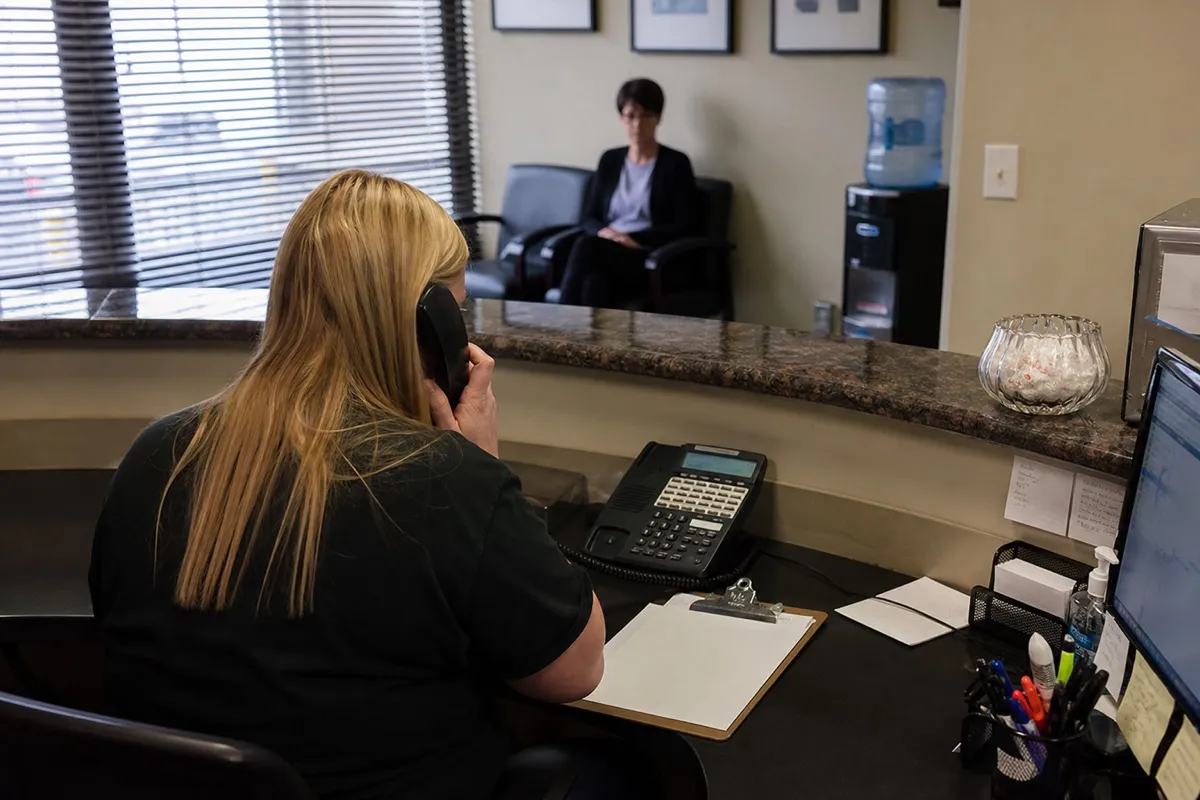
A dental receptionist in the US averages around 21 dollars an hour, or roughly 44,000 dollars a year full-time. But that wage is what the receptionist takes home, not what the seat costs you. Loaded with payroll taxes, health benefits, paid time off and absence cover, one front-desk seat lands closer to 54,000 to 58,000 dollars a year - and the calls it still cannot answer cost more again.
Every salary page you can pull up online answers a different question: what a receptionist will earn. None of them answers the one you actually need as a practice owner, which is what staffing the desk costs you, and what it loses you when the phone rings and nobody can pick up.
The headline wage is the small number
Search "dental receptionist salary" and you get page after page of aggregators quoting the same band: somewhere around 21 dollars an hour, or low-to-mid 40,000s a year for a full-time desk. That is a useful starting figure. It is also where most owners stop thinking about the cost.
The wage is only the part the receptionist sees. The part you pay is bigger, because employing anyone in the US comes with a stack of on-costs that never show up in a job posting.
The fully-loaded cost of one front-desk seat
Take a 45,000 dollar salary as a round example and build the real bill on top of it:
- Salary: 45,000 dollars.
- Payroll taxes: the employer half of FICA, plus federal and state unemployment - a few thousand dollars on top, paid by you, not the employee.
- Health benefits: if you offer coverage, this is the line that moves the number the most, often several thousand dollars a year per person.
- Paid time off: the desk needs covering for vacation, plus holidays.
- Sick and absence cover: a temp or float receptionist when someone is out, often at a premium.
- Recruiting and training: posting the role, interviewing, and the weeks before a new hire is up to speed - a real cost every time someone leaves.
Stack those up and a 45,000 dollar salary becomes something like 54,000 to 58,000 dollars a year to actually keep that chair filled. The wage is roughly 75 to 80 percent of the true cost; the rest is the part nobody quotes.
One desk, one phone line
Here is the structural problem that no raise fixes: a single receptionist is one person on one line. They cannot answer a new-patient call while they are checking a patient in, running a card, or working through a line at the desk. The busiest moments in the practice are exactly the moments the phone rings most.
Then there are the hours the desk simply is not there. Lunch. Evenings after the desk goes home. Weekends. The day someone is out sick and cover never showed. A nervous new patient who finally worked up the nerve to call at 6:30 gets voicemail, and a nervous patient does not leave a message - they call the practice down the road that picks up.
None of that is a failing of the person on the desk. It is the simple physics of one phone and one pair of hands.
What a missed new-patient call is actually worth
This is the math nobody does. A new patient is almost never a single appointment. Run it through honestly:
- A new patient comes in for an exam, then hygiene, then whatever treatment they need.
- They come back for recall every six to twelve months, often for years.
- Across that relationship, a single new patient is commonly worth anywhere from several hundred to a few thousand dollars in lifetime value.
Now say your practice misses just three genuine new-patient calls a week - people who found you, wanted to book, and got voicemail. Even if only one of those three would have become a patient, that is one lost patient a week. Over a year that is dozens of patients who never joined, each carrying that lifetime value with them to whoever answered instead.
You will not see those losses anywhere. There is no missed-patient report. The chair just stays a little emptier than it should, and the desk salary on your payroll quietly looks like the whole cost of reception when it is only part of it.
The break-even: cover that pays for itself
Set the two numbers side by side. On one side, the fully-loaded cost of staffing a desk that still goes dark at lunch, after five, on weekends, and on sick days. On the other, the value of the new patients those gaps are quietly costing you.
| A front-desk seat | A missed new-patient call | |
|---|---|---|
| What it is | One person on one line | A patient who called and got voicemail |
| Cost | 54,000 to 58,000 dollars a year all-in | One patient and their lifetime value, gone |
| Covers | Office hours, when not already busy | Nothing - the call is simply lost |
| After hours | No | When most personal calls are made |
The honest framing is not "fire the receptionist." A good front-of-house person is worth every cent for the patients in front of them. The framing is that the desk cannot be in two places at once, and the cheapest fix for the calls it misses is cover that never goes to lunch, never goes home, and never calls in sick. One captured new patient a month tends to outvalue the entire cost of that cover.
It is not staff versus software - it is answered versus missed
The choice was never receptionist or machine. It is whether the calls your desk physically cannot reach get answered or get lost. Your receptionist handles the practice in front of them; something needs to handle the calls that land while they are busy, or after the lights go off.
That is the same point that decides everything else about growing a practice. You cannot fill the chair you marketed for if the phone goes to voicemail, which is exactly why the call-handling step is the one every dental marketing guide skips. And once you decide those calls have to be answered, the real question is how - voicemail, in-house, a live answering service, or AI - which is a comparison worth making on the numbers, not the marketing.
Do your own version of the math this week: your real desk cost, all-in, against the new patients walking to whoever picks up when you cannot. Whatever falls out the bottom is what answering every call is worth to your practice. If you want to see how always-on cover works for a dental practice, start with our overview of call answering for dentists.
Frequently asked questions
- How much do dental receptionists get paid in the US?
- A dental receptionist in the US averages around 21 dollars an hour, or roughly 44,000 dollars a year full-time, with most landing somewhere in the 16 to 28 dollar range. But that headline wage is what the receptionist earns, not what the seat costs you. Add payroll taxes, health benefits, paid time off and absence cover and the real bill runs meaningfully higher.
- What does a dental receptionist actually cost an employer?
- Once you load the salary with payroll taxes, health benefits, paid time off, sick and absence cover, and recruiting, a 45,000 dollar salary lands closer to 54,000 to 58,000 dollars a year all-in. The wage itself is roughly 75 to 80 percent of the true cost of the seat.
- Is being a dental receptionist stressful, and why does that matter for missed calls?
- Yes. The busiest moments at the desk are exactly when the phone rings most: checking patients in, taking payment, working a line of people. One person on one line cannot do all of it at once, so calls drop precisely when demand is highest. That is the structural gap, not a performance problem.
- What is a new dental patient worth?
- A new patient is rarely a one-off. Between the first exam, hygiene visits, any treatment, and years of recall appointments, a single new patient is commonly worth anywhere from several hundred to a few thousand dollars in lifetime value. That is what rings out to voicemail when nobody can pick up.
More dental offices guides
How to get more dental patients (without losing the calls)
Where new dental patients actually come from, ranked by cost and conversion, and the final step the agencies leave out: capturing the phone call your marketing already paid for.

Dental Answering Services Compared: The Honest Options Table
A real side-by-side of every way to cover your practice phone - voicemail, in-house front desk, a live answering service, and AI - with indicative pricing and the new-patient math, so you decide on merit instead of marketing.

The real cost of a veterinary front desk: software, staff, and missed calls
An honest operator breakdown of what a veterinary front desk costs a practice owner: practice management software pricing, the true cost of a receptionist seat the software cannot replace, and the lost-appointment math on the calls nobody answers.