
How to start a plumbing business in 2026: the operator setup guide
Everything an operator needs to start a plumbing business: the qualifications and registration to get right, how to set up as a sole trader or limited company, what to charge, the kit you actually need, and how to win and keep your first customers.

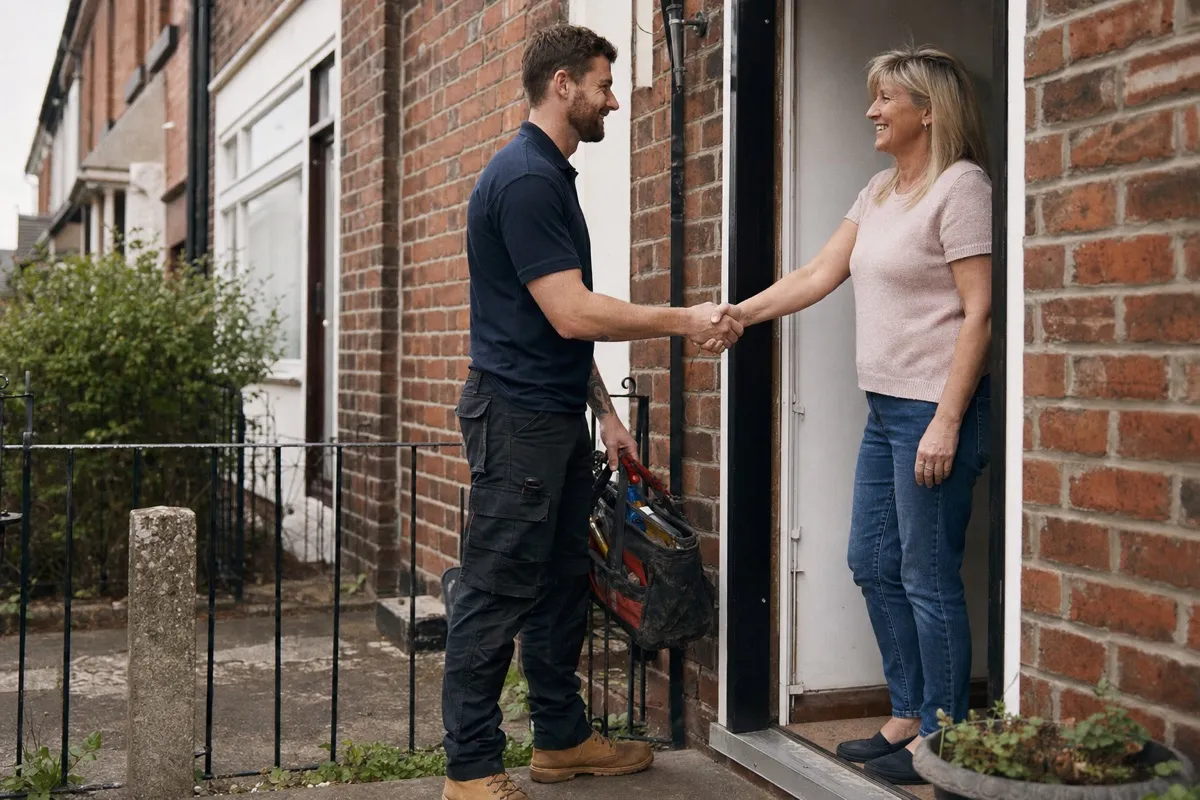
Starting a plumbing business is one of the safer bets a qualified tradesperson can make. The work is steady, the barriers are skills and setup rather than capital, and demand does not dry up. The real risk is not finding jobs. It is the admin, the cash flow, and the calls you miss while your hands are full.
This is the from-scratch sequence: get qualified and registered, choose how you trade, set your rates, kit out, win your first customers, and put the systems in place so you do not leak work from day one.
Is a plumbing business worth starting in 2026?
Yes, for a qualified plumber, starting a business in 2026 is worth it: demand for repairs, boiler work and bathroom fits stays steady through any economy, start-up costs are low compared with most trades, and you set your own rates. The barrier is skills and setup, not capital. The real risk is admin and cash flow, not a shortage of work.
The honest version is that the plumbing is the easy part. Running the business around it is what separates the plumbers who thrive from the ones who stay flat out and broke. Get the order right and the rest follows.
1. Get qualified, registered and insured
Before you take a single job, three things have to be in place. There is no shortcut here.
- Qualification. You need a recognised plumbing qualification, typically an NVQ Level 2 or 3 or the equivalent. Any gas work legally requires Gas Safe registration, and certain heating and water work needs its own competence.
- Registration. Register as self-employed (or set up your company) with the tax authority so you are paying tax correctly from the first invoice.
- Insurance. Public liability insurance is non-negotiable, and most plumbers also carry tools cover and, with staff, employers' liability.
Get these wrong and one bad job can finish the business before it starts. Get them right and you can trade with confidence.
2. Sole trader vs limited company
The next decision is how you trade. Most plumbers start as a sole trader because it is simpler, then incorporate later as profits grow. Neither choice is permanent.
| Sole trader | Limited company | |
|---|---|---|
| Setup | Register as self-employed, minimal paperwork | Incorporate, more admin and filings |
| Liability | You are personally liable for debts | Liability limited to the company |
| Tax | Pay tax on profits as income | Often more efficient at higher profits |
| Best when | Starting out, modest earnings | Profits rising, want protection |
Whichever you choose, watch the VAT threshold. Once your turnover crosses it you must register for VAT, which changes your pricing and your paperwork. Plenty of plumbers deliberately manage their turnover around that line in the early years. An accountant will pay for themselves here.
3. What to charge from day one
The most common new-plumber mistake is pricing to be the cheapest. You win the work and then realise you are flat out and barely clearing costs. Price from your numbers instead: your real hourly cost, plus a margin that leaves you a wage and something for the quiet weeks.
Set a clear call-out charge, an hourly rate, and a day rate, and quote fixed prices for larger jobs once you can scope them confidently. Out-of-hours work should carry a premium, and you should say so up front.
For the full picture of what the market pays and what owners actually take home, see our guide to what plumbers charge and earn.
4. Tools, van and kit you actually need
You do not need a fully loaded van on day one. You need a reliable vehicle and the core kit for the work you will actually take, then you add specialist tools as paying jobs call for them.
- A reliable van, used is fine, with secure racking and storage.
- Core hand tools, pipe-working tools, and leak detection.
- A small stock of the parts you fit most often, so you are not making a merchant run mid-job.
- Basic safety kit and a way to take card payments on site.
Over-buying before the work is there is how new plumbers tie up cash they need for the lean first months. Buy for the jobs you are winning, not the jobs you hope to.
5. Getting your first customers
Your first customers come from being visible locally and easy to reach, not from a big budget. The fast wins are free or close to it.
- Set up a Google Business Profile and keep it complete and current.
- Get your van sign-written so every job advertises the next one.
- Ask for a review after every job, because local trust is what converts strangers into callers.
- Tell everyone you know that you are trading, and list on a reputable trade site or two.
That is enough to get the phone ringing. Turning a steady stream of enquiries into a full diary is a bigger topic, and our playbook on how to get more plumbing jobs covers the growth side once you are established.
6. The systems that stop you losing work from day one
Here is the part most new plumbers get wrong. They sort the van, the tools and the marketing, then run the business out of their head and their voicemail. Three simple systems stop the leaks: tidy bookkeeping so you always know your numbers, a way to quote fast so jobs do not go cold, and a reliable way to answer the phone.
That last one is where new plumbers lose the most work without ever seeing it. The moment your number is on a van, the calls start, and you cannot answer them with your arm down a U-bend. A missed call in week one is not a missed call. It is a customer who rings the next plumber and never tries you again.
You do not have to choose between doing the work and answering the phone. An AI receptionist picks up every call, books the job or takes the details, and texts you what matters, so you keep the work you have already paid to win. That is the front of the whole system: see how it fits the bigger picture of call handling for plumbers.
Get the setup right and the first year stops being a scramble. The plumbing was never the hard part. The business around it is, and the operators who win are the ones who never let a job slip through a gap they could have closed on day one.
Frequently asked questions
- Do I need qualifications to start a plumbing business?
- Yes. You need a recognised plumbing qualification (typically an NVQ Level 2 or 3, or the equivalent) to work safely and to be taken seriously. Any gas work legally requires Gas Safe registration, and certain water and heating work needs its own competence. You can register the business itself with no exam, but you cannot trade safely or insure yourself without the trade skills first.
- How much does it cost to start a plumbing business?
- Most plumbers start for a few thousand pounds rather than tens of thousands. The big costs are a reliable van, your core tools, public liability insurance, and a small stock of common parts. You can keep it lean by buying a used van and adding specialist kit only as paying jobs call for it, rather than fitting out for work you have not won yet.
- Should I be a sole trader or a limited company?
- Start as a sole trader if you want the simplest setup and your earnings are modest, since the paperwork and accounting are lighter. Move to a limited company once profits rise, when you want the protection of limited liability or the tax treatment starts to favour it. Many plumbers begin as sole traders and incorporate later, which is a perfectly normal path.
- How do I get my first plumbing customers?
- Start with a free Google Business Profile, a sign-written van, and a request for a review after every job, because local trust is what converts. Tell everyone you know that you are trading, list on a reputable trade site or two, and answer every call you get. Your first customers come from being visible locally and easy to reach, not from a big marketing budget.
More plumbers guides
What plumbers charge and earn in 2026: an operator pricing guide
What the market pays for plumbing work and what a plumbing business owner actually takes home: typical call-out, hourly and day rates, how to set your own prices, and what quietly eats your margin.
How to get more plumbing jobs: a practical marketing playbook
A no-nonsense playbook for winning more plumbing work: get found on Google, build reviews, earn referrals, use lead sites wisely, mine repeat customers, and answer fast.
The best software every plumber needs in 2026
There is no single best plumbing software. Here is an honest, vendor-neutral guide to the categories a plumbing business actually needs, the tools worth knowing, and how to choose without overpaying.