
Best pest control software in 2026: an operator buyer guide by job
A neutral, operator-written guide to the pest control tech stack - scheduling, CRM, invoicing and compliance reporting, and call handling - organised by the job each tool does, with UK BPCA reporting in mind.

On this page
- What pest control software actually does
- How to choose: think in jobs, not brands
- Scheduling and routing software
- CRM and customer records
- Invoicing, billing and compliance reporting
- Call handling and answering, the category every listicle skips
- Building the minimum stack (solo, one-van and just starting)
- Putting it together
There is no single best pest control software. The right stack depends on the job you need solved: scheduling and routing, customer records, invoicing and BPCA-ready reporting, or call handling. Most operators run a job-management app plus accounting plus a reliable way to answer every call, not one tool that does it all.
Search "best pest control software" and you get vendors crowning their own product number one, a directory that lists twenty-five tools without telling you which to pick, and a Reddit thread of pest controllers who trust neither. None of it answers the real question, which is not "which brand" but "which job am I trying to fix first".
This guide takes the opposite approach. It organises the market by the job each tool does, names the platforms you will actually come across, stays honest about where each fits, and refuses to pretend one product wins every category. If you run a one-van round or a small team and you want to stop overpaying for features you will never touch, start here.
What pest control software actually does
Pest control software is a set of tools that run the back office of a pest management business so the operator can spend more time on site and less on admin. In practice it covers a handful of distinct jobs:
- Scheduling and routing - booking jobs, assigning technicians, and ordering the day so you are not crossing town twice.
- Customer records (CRM) - every site, contact, contract and visit history in one place.
- Treatment and compliance reporting - logging products used, environmental risk assessments, bait-box maps and signatures, so each visit is defensible.
- Invoicing and billing - turning a completed job or a recurring contract into money without manual re-keying.
- Call handling - making sure the enquiry that comes in while you are kitted up actually gets answered.
Almost nobody buys all of that as one product, and you should not try to. Some platforms bundle the first four; the fifth, answering the phone, sits outside every one of them. The smart move is to find the one job currently costing you money or evenings, fix that first, and add the rest as you grow.
How to choose: think in jobs, not brands
The fastest way to waste money on software is to buy the platform with the longest feature list. The fastest way to choose well is to rank the jobs above by how much each is currently costing you, then buy for the top of that list.
A few rules that keep the decision honest:
- Match the tool to your size. A solo operator needs a clean diary and tidy invoices, not an enterprise routing engine built for fifty technicians.
- Check the UK fit. A lot of the loudest names are US-built. If a platform cannot produce a BPCA-style treatment record or handle UK rodenticide reporting, it will cost you at audit time.
- Check what it does not do. Most "all-in-one" pest control platforms quietly stop at the front door: they manage the jobs you already have but do nothing about the calls you miss.
A quick word on neutrality, because the listicles never offer it: nothing below is ranked one to ten, nobody paid to appear, and we only put our own product in the single category it belongs in. Tools are grouped by the job they do, so you can read only the section that matches your bottleneck.
Scheduling and routing software
This is the core category most people mean by "pest control software". It covers booking, technician assignment, recurring-contract scheduling and route optimisation, which matters the moment you run more than one van or service a spread-out commercial round.
The names you will come across, with an honest line on each:
- GorillaDesk is a popular, approachable all-rounder for small and growing teams; strong scheduling and a generous feature set, US-built but widely used.
- FieldRoutes and PestPac (both WorkWave) are heavier, enterprise-leaning platforms aimed at established multi-route firms; powerful routing, more than a solo needs and priced to match.
- Briostack and Pocomos are US field-service platforms with solid automation and customer messaging.
- iGEO and Insectram are built with UK and European pest control in mind, with digital site mapping and compliance baked in rather than bolted on.
- Powered Now and Pest Reports Pro suit UK trades and smaller operators who want scheduling and reporting without an enterprise contract.
| Tool | Best for | Watch out for |
|---|---|---|
| GorillaDesk | Small, growing teams who want simple | US defaults; check UK reporting fit |
| FieldRoutes / PestPac | Established multi-route firms | Enterprise pricing and setup; overkill for a solo |
| iGEO / Insectram | UK and EU compliance-led operators | More to learn than a basic diary |
| Pest Reports Pro / Powered Now | UK solo and small operators | Lighter on heavy route optimisation |
| Briostack / Pocomos | Automation-heavy US-style rounds | North American focus; check UK fit |
There is no winner here on purpose. The right pick depends entirely on whether you run a single van or a fleet, and whether you need deep route optimisation or just a diary that stops you double-booking.
CRM and customer records
Every job you have ever done is a future job, if you can find it again. A customer record keeps the history of each site: which contract they are on, what you treated, where the bait boxes are, and when the next visit is due.
Most of the scheduling platforms above include a CRM, which is the main reason to consolidate rather than buy a separate tool. For a pest control business specifically, the record needs to hold the things that make repeat and contract work easy: site contacts, access notes, contract renewal dates and a full treatment history per location.
That history is what lets you send a renewal reminder before a commercial contract lapses, quote accurately for a repeat visit, and walk into a site already knowing what you did last time. Recurring contract work is the most profitable work in this trade, and a tidy customer book is what protects it. Pricing those contracts is its own skill, which we cover in the guide on what to charge for pest control.
Invoicing, billing and compliance reporting
Two jobs sit together here because in pest control they overlap: getting paid, and proving what you did.
On the billing side, most job-management platforms raise invoices from a completed job or a recurring contract, and the better ones chase payment automatically and reconcile into your accounts. If you would rather keep the books separate, Xero, QuickBooks, FreeAgent and Sage all handle VAT and Making Tax Digital; the real win is connecting your accounting software to your job app so an invoice raised on site flows through without being keyed in twice.
The part US-built listicles ignore is compliance reporting, and in the UK it is not optional. A defensible visit record means logging the product used, the environmental risk assessment, bait-box locations and a mapped site plan, and capturing a signature. Platforms built for the UK and Europe such as iGEO, Insectram and Pest Reports Pro treat this as a first-class feature; many US platforms simply do not produce the record a BPCA member or an auditor expects.
Call handling and answering, the category every listicle skips
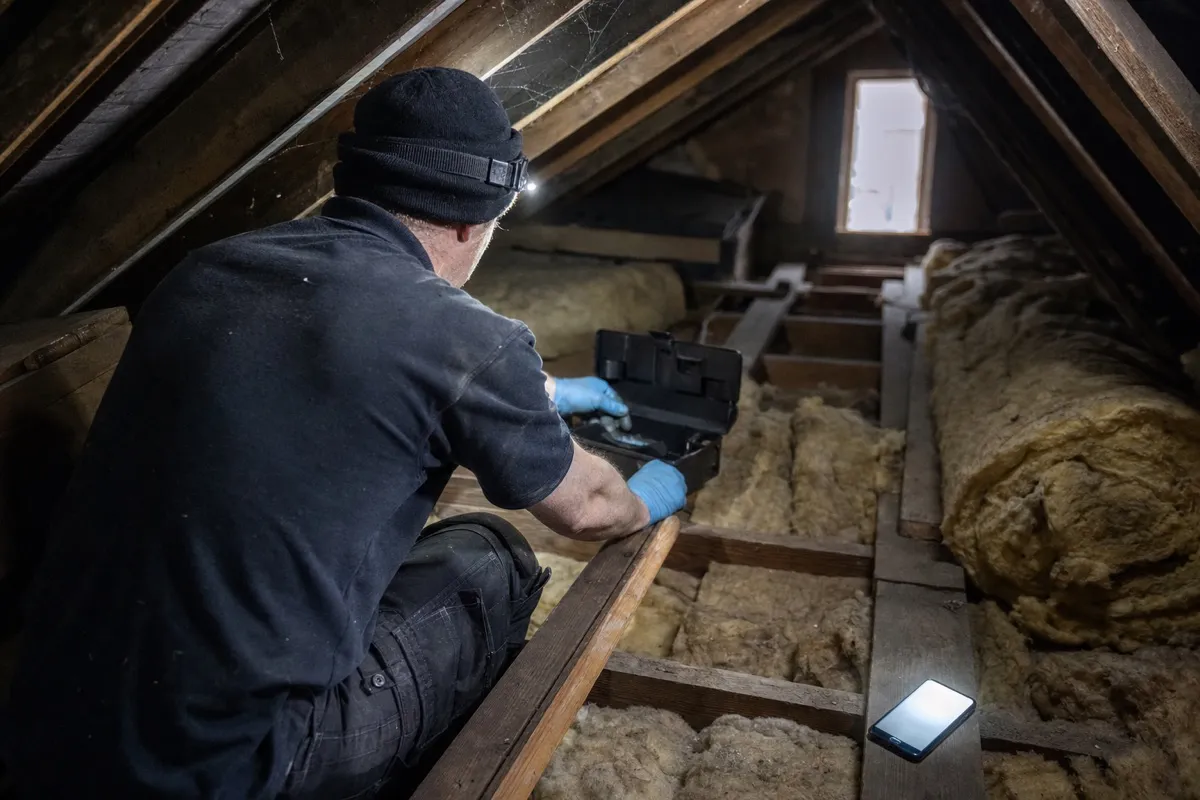
Here is the gap every "best pest control software" roundup leaves wide open. Every tool above manages the jobs you already have. Not one of them catches the enquiry that comes in while you are in a loft in full kit with both hands on a hand-lance and the phone ringing in the van.
That missed call is the most expensive software gap in the business, because it happens before any of the other tools get a chance to do their job. Pest work is urgent and emotional: a household with rats in the kitchen or a wasp nest by the back door is not leaving a voicemail and waiting, they are calling the next firm on the list. Out of hours, that leak is brutal, which is exactly why so many operators go looking for someone to answer the phone for them.
Answering is its own category, and it sits in front of the whole stack. This is the one place we put our own corner of the market, and only here: Jodie answers calls for pest control businesses when you cannot, captures the pest, the site and the urgency, and texts the details straight to you, so the enquiry actually reaches your scheduling app instead of your competitor. The maths is simple - one captured emergency callout usually covers the cost of never missing one again. We do the full version of that calculation in the guide on how to get more pest control jobs.
| Job | What it covers | Where it usually lives |
|---|---|---|
| Scheduling and routing | Bookings, technician assignment, route order | Job-management platform |
| CRM and records | Site history, contracts, contacts, treatment log | Job-management platform |
| Invoicing and compliance | Billing, VAT, BPCA-style treatment reports | Job app plus accounting |
| Call handling | Answering every call, capturing the enquiry | A separate answering service - usually nowhere |
Building the minimum stack (solo, one-van and just starting)
If you are just starting or running a single van, ignore most of the above. You do not need an enterprise platform and you definitely should not pay for one. The minimum viable pest control stack is four jobs covered cheaply:
- A simple scheduling and reporting app - something like Pest Reports Pro, Powered Now or a small GorillaDesk plan, enough to book jobs and produce a compliant treatment record.
- Accounting - Xero, QuickBooks or FreeAgent for VAT and MTD, connected to the app above so you are not typing invoices twice.
- A payment method that gets you paid on the day - a card reader or pay-by-link, so you are not chasing a homeowner for a sixty-pound callout three weeks later.
- Call handling - the one a solo operator should never skip, because you physically cannot answer the phone with both hands in a wall cavity.
On "free": several platforms offer free or near-free starter tiers, and they are fine to begin with. Just read the cap. Free usually means a limited number of jobs, users or invoices, and it borrows time from your evenings in manual workarounds at a poor exchange rate. Free only beats paid until the admin starts eating the time you should be spending on the tools or asleep.
Putting it together
The best pest control software is not the longest stack or the platform with the most features. It is the smallest set of tools that fixes the job currently costing you money, produces a compliant record for every visit, plays nicely together, and then gets out of your way.
Most operators end up with three things: a job-management app for scheduling, records and reporting; accounting wired into it; and a reliable way to answer every call. Get those clear, buy in that order, and add the rest only when you outgrow it. Then point the whole machine at winning more work, which is a separate skill covered in our pest control lead-generation playbook, and back at the pest control answering service pillar that makes sure the work reaches your software at all.
For the record, the tools above are grouped by job rather than ranked, and named because they are the platforms UK pest controllers actually run, not because anyone paid to be here. Pick by your bottleneck, check the UK compliance fit, and do not let a slick diary distract you from the call you are not answering.
Frequently asked questions
- What software do I need to run a small pest control business?
- A minimum pest control stack is four jobs, not four brands: a scheduling and routing app, a customer record (CRM), invoicing with BPCA-ready treatment reporting, and a reliable way to answer every call. Many job-management platforms bundle the first three; call handling almost always sits outside them, which is why so many one-van operators leak after-hours enquiries.
- How much is PestPac software?
- PestPac (by WorkWave) does not publish flat pricing; it is quote-based and aimed at established, multi-route firms, so expect a per-user monthly fee plus setup rather than a fixed sticker. As a rule the category runs from roughly free or low-cost solo tiers up to enterprise platforms priced per technician per month, so always get a written quote and check what reporting and routing are included before you commit.
- Can I do pest control on my own?
- Yes. A solo or one-van pest control business is completely viable with the right stack and the right qualifications (in the UK, an RSPH Level 2 award and BPCA membership are expected rather than legally mandatory). The trap is not the field work, it is the admin and the phone: you cannot answer a call while you are kitted up in a loft, so the one tool a solo operator should not skip is call handling.
- What are the 3 C's of pest control?
- The three C's are usually summarised as cleanliness, condition and control: keep the site clean, fix the conditions that attract pests (food, water and harbourage), and then apply the right control method. Good software supports all three by logging site conditions, recommendations and treatments so you have a defensible record for each visit.
More pest control guides
How to get more pest control jobs: a lead-gen and conversion playbook
A practical playbook for pest control operators to generate more leads and actually convert them - local search, reviews, referrals, paid leads, and the missed-call leak that sends after-hours jobs to your competitor.
What to charge for pest control: a pricing guide for operators
How to price pest control jobs and contracts for profit: UK callout and hourly benchmarks, a per-pest price table, where the margin really is, and how to quote with confidence. Written for the operator, not the homeowner.