
Landscaping pricing: what to charge so you actually make money
How to price landscaping and gardening jobs so you make money: UK day-rate and hourly benchmarks, a simple cost-plus-margin method, and the van, insurance and downtime your rate has to cover.

On this page
- What landscapers and gardeners charge in the UK
- How to price a landscaping job: the cost-plus-margin method
- A worked example
- What your rate has to cover (and why 25 pounds an hour is tight)
- Start-up versus ongoing costs
- The quote you priced perfectly still loses if nobody answers
- The point is not the exact number
A lone maintenance gardener in the UK typically charges around 150 to 250 pounds a day, a two-person crew around 300 to 450 pounds, and hard-landscaping or design work 350 pounds and up. But the number you quote is not the money you keep. Set your rate from your costs and the take-home you want, not from whatever the gardener down the road charges.
This guide is for the person running the business, not the homeowner getting a quote. It gives you the going rates as benchmarks, then the part nobody publishes: how to price an actual job, with a margin, so a full diary turns into a full bank account.
What landscapers and gardeners charge in the UK
Treat the figures below as the going market rate, not your rate. They move with region, skill, the size of your crew and how much kit a job needs. Routine maintenance mowing sits at the bottom; design, planting and hard landscaping carry more skill and risk and command more.
| Type of work | Hourly | Day rate | Markup on materials |
|---|---|---|---|
| Lone maintenance gardener | Around 20 to 30 pounds | Around 150 to 250 pounds | Low, mostly labour |
| Two-person crew | Around 40 to 55 pounds | Around 300 to 450 pounds | Around 10 to 20 percent |
| Planting and soft landscaping | Around 30 to 45 pounds | Around 250 to 400 pounds | Around 20 to 30 percent |
| Hard landscaping and design | Around 35 to 50 pounds | 350 pounds and up | Around 20 to 40 percent |
The benchmark tells you whether you are in the right area. It does not tell you whether the figure actually covers your costs and pays you a wage, which is the part that matters and the part the rest of this guide works out.
How to price a landscaping job: the cost-plus-margin method
The cleanest way to quote is cost-plus-margin. You build the price up from what the job actually costs you, then add a margin on top. It stops you guessing, and it stops you under-pricing the jobs that look quick but eat materials and travel.
There are four parts to every quote:
- Materials. Turf, plants, aggregate, slabs, timber, compost, fixings. Price these at what you pay, then add your markup so you are not handling other people's stock for free.
- Labour hours. Be honest about how long the job takes a crew of your size, then multiply by your day or hourly rate. Include set-up, clear-up and the trip to the tip.
- Overhead share. A slice of your van, fuel, insurance and kit for the days the job ties up. This is the cost most gardeners forget to load in.
- Target margin. Add around 15 to 25 percent on top of all of the above. That is your buffer for the quote that runs long, the wet week, and the profit that lets the business grow rather than just survive.
A worked example
Say a customer wants a small patio: lift the old slabs, lay a new 15 square metre porcelain patio, and tidy the borders. Here is the quote built from the ground up.
- Materials: porcelain, sub-base, sand and fixings come to around 1,400 pounds at your cost. Add 20 percent markup and you charge 1,680 pounds.
- Labour: a two-person crew for three days at a 380 pound day rate is 1,140 pounds.
- Overhead and waste: skip hire, tip runs and a share of van and fuel, say 250 pounds.
- Subtotal: 3,070 pounds. Add a 20 percent margin and you quote 3,684 pounds.
Round it to 3,700 pounds and you have a quote that covers your materials, pays your crew properly, carries its share of running the business, and leaves real profit. A gardener who quotes "three days at 380 a day plus materials" with no margin and no overhead share has just done the same work for hundreds of pounds less, and never worked out why the year felt tight.
What your rate has to cover (and why 25 pounds an hour is tight)
The reason a low hourly rate fails is everything it has to pay for before a penny becomes wage. As a sole trader or small crew, your rate carries all of this:
- The van: finance, fuel, insurance, tax, servicing and tyres.
- Kit: mowers, strimmers, blowers and hand tools, plus fuel, servicing and the replacement fund for when they wear out.
- Public liability insurance, and waste carrier registration so you can remove green waste legally.
- Waste disposal and tip charges, which add up fast across a year.
- The unbilled hours: quoting, travel between jobs, ordering materials and chasing payment.
- Winter downtime, when the work dries up but the van finance does not.
Run 25 pounds an hour through that list and you can see why it is tight. It covers a lone maintenance gardener's costs and leaves a modest wage, but it has almost no room for a broken mower, a wet fortnight or a customer who pays late. Routine mowing can live there as a floor. The skilled work, planting, design and hard landscaping, should not.
Start-up versus ongoing costs
Two different cost questions shape your rate, and it is worth keeping them apart. Your start-up costs are the one-off bill to get trading: a van or trailer, your core kit, insurance, waste carrier registration and a bit of branding. For most UK gardeners that lands somewhere around 3,000 to 7,500 pounds, depending on whether you buy or hire the heavy kit. We cover the full setup in our guide to starting a landscaping business.
Your ongoing costs are what the business burns every month whether you work or not: van finance, insurance, fuel, kit replacement and the rest of the overhead stack above. Those are the figures that have to be baked into your day rate, because they do not pause when the diary is quiet. Price as if they only happen when you work and you will fall short every winter.
The quote you priced perfectly still loses if nobody answers
You can build the cleanest pricing model in the trade and still end the year short, because a rate only earns out on jobs you actually win. The perfect quote does nothing for the enquiry you never got to give.
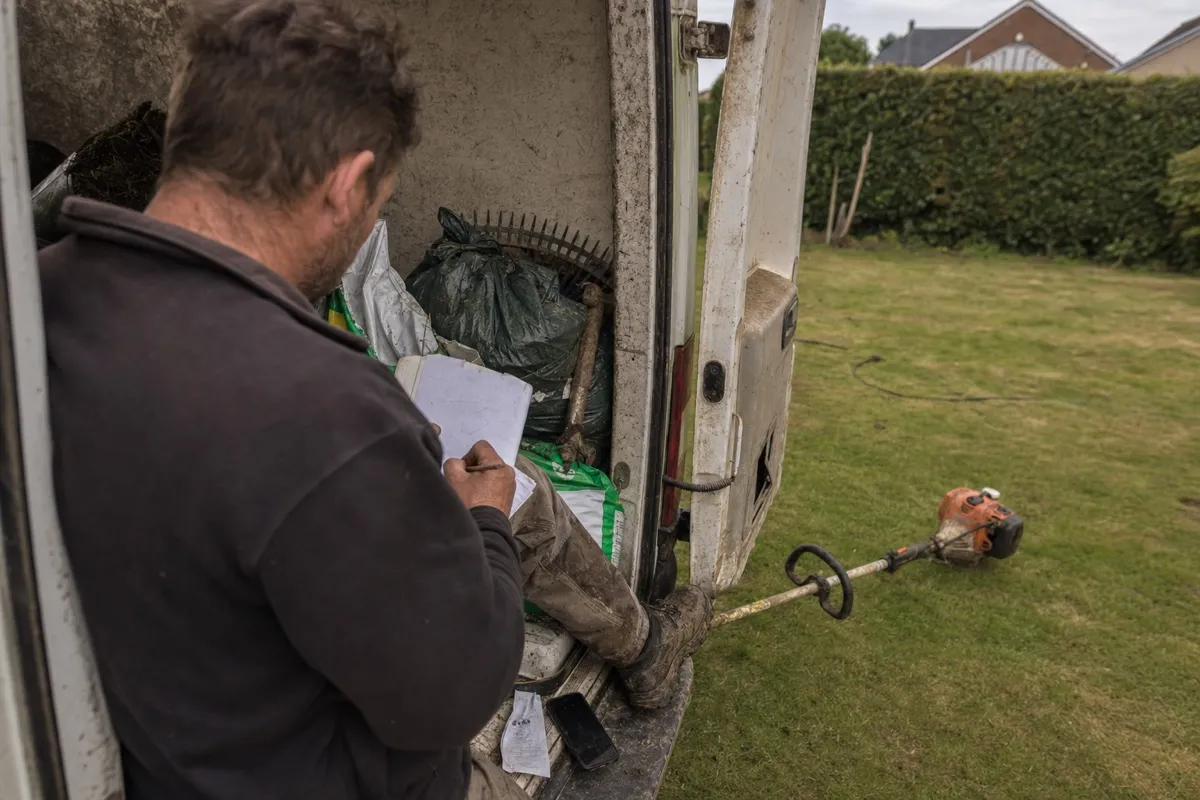
And the most expensive leak in most gardening businesses is exactly that: the call that came in while you were halfway up a hedge or running a mower, went unanswered, and went to the next gardener on Google. You would have priced that job right. You just never got the chance. Every missed call is a quote you handed a competitor for free.
The point is not the exact number
Your figures will differ from the worked example, and they should. A different region, a bigger crew, a specialism in design or hard landscaping, leaner overheads or pricier kit all move the number. What does not change is the method: build the price from materials, labour, overhead and margin, then check the result against the going market rate, not the other way round.
Run your own version this week on the next job you quote. The benchmark table tells you whether you are in the right ballpark; the cost-plus-margin method tells you what to actually charge; and the calls you miss tell you why a fair rate has not turned into a fair year. For more on closing that last gap, see how call answering for gardeners fits in, and our roundup of the best landscaping business software for the tools that keep your quoting and invoicing tight.
Frequently asked questions
- How much should a landscaper charge per day?
- A lone maintenance gardener in the UK typically charges around 150 to 250 pounds a day, a two-person crew around 300 to 450 pounds, and hard-landscaping or design work 350 pounds and up. Set your figure from your costs and target take-home, not the going rate. The day rate has to cover your van, fuel, insurance, kit and the unpaid time around the job, not just your hours on the tools.
- How do you price landscaping jobs in the UK?
- Add up your materials, your labour hours at your day or hourly rate, a share of your overheads for the time on site, then add a target margin of around 15 to 25 percent on top. Quote the total as a fixed price, not an hourly rate, so the customer sees one clear number and you keep any efficiency you earn. Always price the waste removal and travel in, never absorb them.
- Is 25 pounds an hour good for a gardener?
- For a lone maintenance gardener, 25 pounds an hour roughly covers your costs but leaves very little margin once you take out van, fuel, insurance, kit and the unbilled time between jobs. It works as a floor for routine mowing and tidying, but design, planting and hard landscaping carry more skill and risk and should command 35 to 50 pounds an hour or more.
- How much does landscaping cost in the UK?
- From the operator side, this is what your clients pay, so it is your pricing ceiling. A garden makeover commonly runs from a few thousand pounds for planting and turf up to 20,000 pounds or more for full hard landscaping with patios, walls and decking. Knowing the going market price tells you where your quotes can sit before a customer balks, which is exactly what you price against.
More gardeners guides
How to start a landscaping business: the operator playbook
A practical operator playbook for starting a landscaping or gardening business: registration, insurance, the waste carrier licence, the kit you actually need, winning your first clients, pricing, and the step every other guide skips - not dropping the enquiries you generate.
The best landscaping business software in 2026
There is no single best landscaping business software. Here is an honest, vendor-neutral roundup of the tools UK landscapers and gardeners actually run, compared by scheduling, CRM, quoting and payments, plus the call-answering layer none of them cover.