
Locksmith hourly rate UK: what to charge and what you earn
An operator's guide to setting locksmith rates and understanding real earnings in the UK: standard, London and emergency pricing, plus take-home after van, tools and insurance.

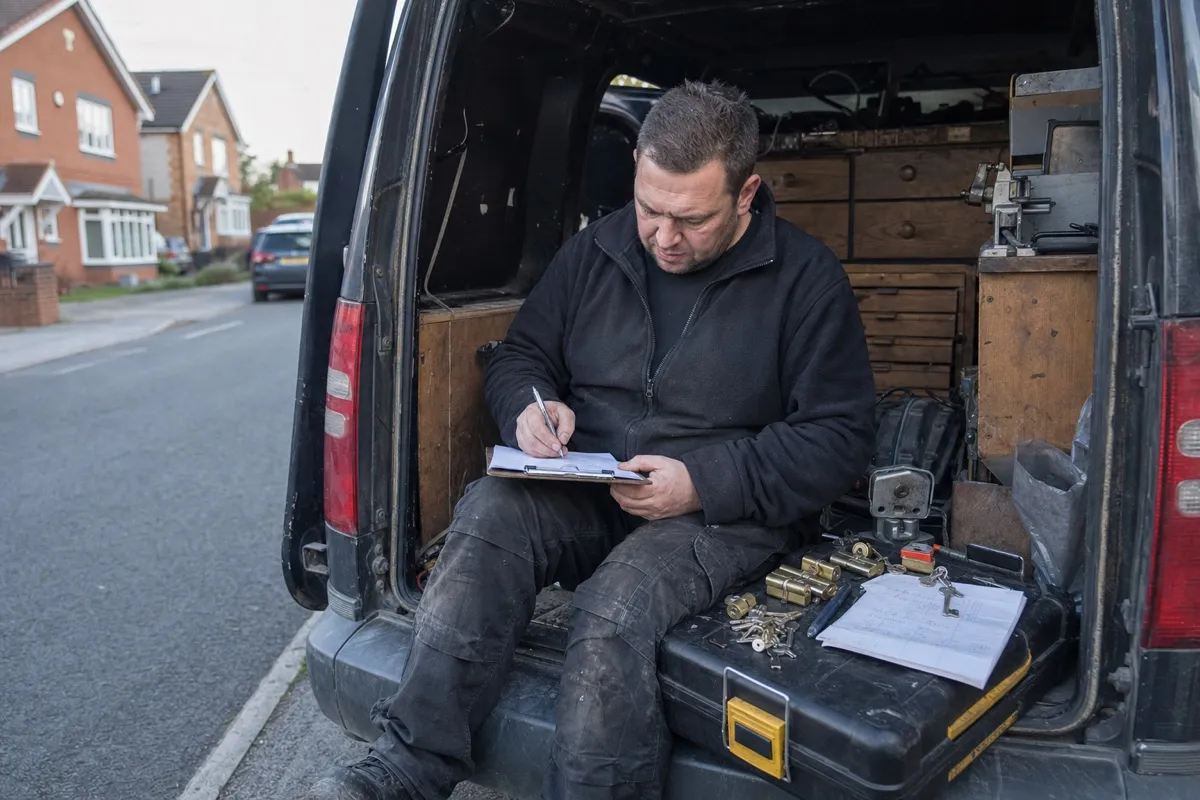
UK locksmiths typically charge around 70 to 95 pounds an hour, with a standard call-out of roughly 50 to 95 pounds and London rates higher again. Out-of-hours and emergency jobs run from about 105 to 153 pounds. Those are market rates. What you actually take home is a smaller number once van, tools and insurance come out.
This guide is for the person running the business, not the customer locked out at midnight. Most articles on locksmith prices tell a homeowner what to expect to pay. This one helps you set a rate card for your area, charge properly for the work nobody else wants, and understand what really lands in your pocket.
What UK locksmiths charge per hour
Here are the rates the market pays across the UK, as benchmarks to price against rather than fixed figures. They move with region, specialism and how urgent the job is. Routine daytime work sits at the lower end; emergency and out-of-hours work carries a clear premium.
| Type of work | Typical UK range | Notes |
|---|---|---|
| Standard hourly rate | Around 70 to 95 pounds | The going daytime rate for routine work |
| London and specialist | Around 95 pounds and up | City overheads, auto and safe work cost more |
| Call-out fee | Around 50 to 95 pounds | Sometimes folded into the final job price |
| Lock change | Around 90 to 148 pounds | Varies with lock type and number of doors |
| Emergency / out-of-hours | Around 105 to 153 pounds | Nights, weekends and bank holidays |
Treat these as the going rate, not your rate. They tell you whether you are roughly in the right area for your patch. They do not tell you whether the number actually pays your bills once a quiet week or a long motorway run is factored in. That part is down to your own costs.
Call-out fees, hourly and fixed-price jobs
The mistake that quietly loses money is charging a flat hourly rate on short jobs. A simple lockout you clear in fifteen minutes still cost you the drive, the fuel, the van and the standby time to be available at all. If you bill only the quarter hour on site, you are underwater before you have packed up.
| How you price | Best for | The risk |
|---|---|---|
| Call-out plus hourly | Most domestic and emergency work | Customers balk if the call-out feels like a surprise |
| Fixed price per job | Common jobs you can scope on sight | A job that fights back eats your margin |
| Hourly only | Long, unpredictable commercial work | Short jobs sell your time far too cheap |
For most one-van operators a call-out fee plus a fair hourly or fixed price is the honest model. The call-out covers the cost of simply turning up; the rest covers the work. Quote it clearly up front and the customer rarely argues, because the alternative is staying locked out.
Why emergency and out-of-hours work pays more
The premium on a 2am callout is not a markup for the sake of it. It reflects real cost. Someone has to be awake and on standby. The response has to be fast. Fuel and vehicle wear at unsociable hours are no cheaper, and opening a door cleanly, without wrecking the frame or the lock, takes skill the customer is genuinely paying for.
This is exactly why out-of-hours rates sit so far above standard ones. The trap is being unwilling to charge for it. If you take emergency calls but price them like daytime work, you are subsidising the worst part of the job. Charge the premium, or do not offer the cover.
What you actually take home
Turnover is not take-home, and this is where a lot of locksmiths fool themselves. A busy self-employed operator might turn over 50,000 to 80,000 pounds a year. The figure that reaches your pocket is a good deal smaller once the costs come out.
The big ones, year in and year out:
- Van, fuel and maintenance, plus the standby miles to emergencies that never convert.
- Tools, picks, key blanks and the stock you carry so you can finish on the first visit.
- Public liability insurance, and goods-in-transit cover for the kit in the van.
- Training, accreditation and the slow weeks where the phone barely rings.
Employed, self-employed and business-owner earnings are three different things. An employed locksmith takes a salary and none of the risk. A self-employed operator sets their own rates but carries every cost. A business owner earns on the margin between what the work bills and what it costs to deliver, which is why a few pounds on the hourly rate matters far less than the jobs that leak away before you ever quote them.
The hidden cost of a missed callout
Here is the cost that never shows up in any rate guide, because it leaves no trace. The biggest hole in most locksmith margins is not the hourly rate or the insurance premium. It is the emergency callout that rang while you were already on a job, under a door, or asleep, and went to whoever picked up next.
A lockout is one of the most urgent purchases a person ever makes. They are standing in the cold and they are not waiting. If you do not answer, they tap the next locksmith on Google, and that priced 105 to 153 pound out-of-hours job, the most profitable work you do, becomes someone else's. You already paid to make the phone ring, through the listing, the van signage and the website. Losing the call is the cheapest mistake to make and the most expensive one to keep making.
How to set your own rate card
Your numbers will differ from the benchmarks above, and they should. Build your rate card from your own costs rather than copying the locksmith down the road, who may be quietly losing money.
A simple way to set it:
- Add up a full year of running costs: van and fuel, tools and stock, insurance, accreditation, software, and a fair wage for yourself.
- Divide that by the hours you can genuinely bill in a year, not the hours you work. Travel, quoting and admin are not billable.
- That figure is your break-even hourly cost. Add your target margin to get your daytime rate, then set an out-of-hours rate well above it.
Then price by job type, not just by the clock: a call-out fee for turning up, a fixed price for the jobs you can scope on sight, and a clear premium for nights and weekends. If you are still finding your feet, our guide to starting and growing a locksmith business walks through setting that first rate before you ever quote a job, and the right locksmith software makes quoting and invoicing at those rates far less of a chore.
The point is not the exact figure. It is the habit of doing the sum: your real cost per billable hour, plus the margin you want, tells you what to charge. The callouts you are losing tell you why busy has not always meant profitable. If you want to see how answering every emergency call fits into that picture, start with our overview of call answering for locksmiths.
Frequently asked questions
- How much do locksmiths charge per hour in the UK?
- UK locksmiths typically charge around 70 to 95 pounds an hour for standard daytime work, with London and specialists charging more. A call-out is usually 50 to 95 pounds and is sometimes folded into the job price. Treat these as market benchmarks to price against, not a fixed rate. The right number for you is whichever covers your real costs and target margin across a realistic billable day.
- Do locksmiths earn good money?
- They can, but turnover is not take-home. A busy self-employed locksmith might turn over 50,000 to 80,000 pounds a year and keep a good deal less once van, fuel, tools, insurance, stock and slow weeks come out. The operators who genuinely earn well price properly, charge fairly for out-of-hours work, and stop losing emergency callouts to whoever answers first, rather than simply working more nights.
- Why are emergency locksmiths so expensive?
- Because the cost of delivering an emergency callout is genuinely higher. Out-of-hours work means a locksmith on standby at night, an immediate response, fuel and vehicle wear at unsociable hours, and the skill to open a door without destroying it. A standard job might be 70 to 95 pounds an hour; an emergency or out-of-hours callout commonly runs 105 to 153 pounds. The premium reflects real cost and risk, not opportunism.
- How much do locksmiths get paid in the UK?
- It depends on whether you are employed, self-employed or running a business. An employed locksmith earns a salary, often in the region of 25,000 to 35,000 pounds. A self-employed operator sets their own rates and can earn more, but carries every cost and quiet week themselves. A business owner with a van or two earns on the margin between what the work bills and what it costs to deliver, which is why pricing and not losing won work matters more than the headline hourly rate.
More locksmiths guides
How to start and grow a locksmith business in the UK
A practical, setup-to-steady-work playbook for starting a UK locksmith business: training and kit, pricing, winning leads, and making sure no emergency callout ever goes unanswered.
The best locksmith software for a small UK operator in 2026
An honest, vendor-neutral look at the software a locksmith business actually runs - scheduling, dispatch, invoicing and call handling - and how a one-van operator should choose. Not key-cutting or key-code tools.